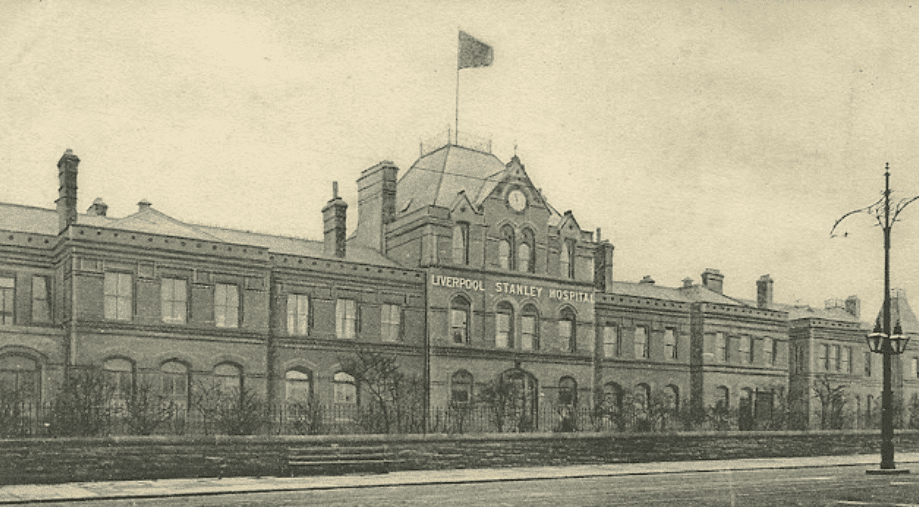

Liverpool Stanley Hospital is a classic example of a Victorian charitable hospital that served the working-class district of Kirkdale for over a century. Founded in 1867 as the Hospital for the Treatment of Diseases of the Chest, Women and Children, it became a true lifeline for the poor families of dockers and port workers. Details can be found at iliverpool.info.
History of Foundation, Development, and Closure
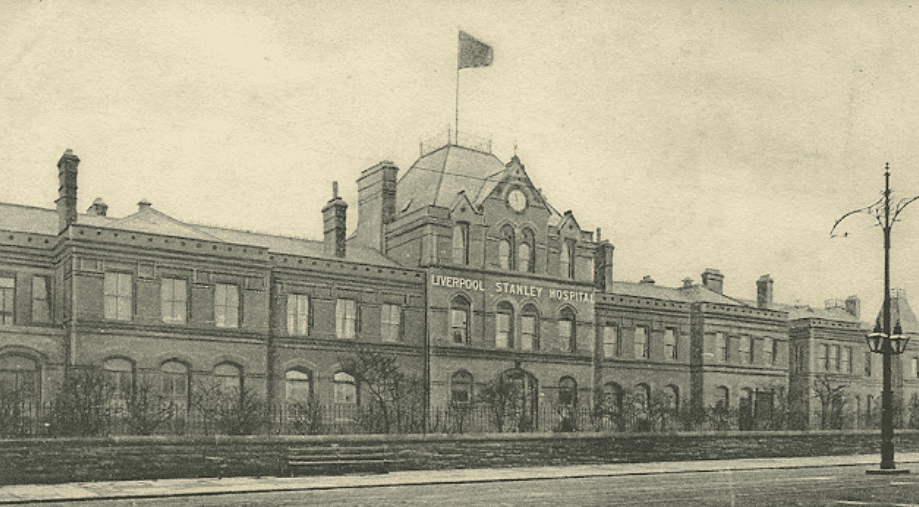
Liverpool Stanley Hospital was founded in 1867 on Stanley Road in the Kirkdale area. Its first name clearly indicated its medical profile at the time: diseases of the chest, and care for women and children. It was a charitable institution maintained entirely by voluntary donations. The facility emerged in one of the city’s most densely populated areas, where lung diseases were extremely common due to industrial pollution.
The first building was closed as early as 1873, and a year later, a new, much larger one was built on its site. In 1937, “The Stanley” became part of the United Liverpool Hospitals. During the Second World War, it continued to operate, providing aid to the wounded and the civilian population. Following the creation of the National Health Service (NHS) in 1948, the institution transferred to state ownership.
In the 1960s, a massive reorganisation of the city’s medical institutions began. In 1963, plans emerged to close The Stanley, and in March 1965, its operations were even officially suspended. However, due to community protests and the acute needs of the area, the Ministry of Health allowed the admission of patients to resume. The hospital finally closed its doors only in March 1976. The site was subsequently cleared, and nowadays, only a section of the old brick boundary wall on Stanley Road serves as a reminder of its existence.
Medical Achievements and Role in the Community
Liverpool Stanley Hospital specialised in the treatment of respiratory diseases – primarily tuberculosis, bronchitis, and pneumonia. These diseases were a true scourge in industrial Liverpool due to poorly ventilated housing, polluted air, and high population density in working-class neighbourhoods. This is why comprehensive care was needed for those categories of patients who suffered most from social deprivation.
A particularly large number of patients came from the Kirkdale area and adjacent working-class quarters. They were often from the poor families of dockers, factory workers, and other port employees. The institution became an important part of the voluntary charitable medicine system, and after 1937, when it joined the United Liverpool Hospitals, it gained broader opportunities for development. During the Second World War, Stanley Hospital worked continuously, taking in wounded and civilian casualties of bombings, thereby supporting the city’s healthcare system in its darkest times.
After transitioning to the management of the National Health Service in 1948, the facility remained accessible to the local community. Although the hospital was not renowned for major scientific breakthroughs, its practical significance was colossal: thousands of families received treatment, maternity care, paediatric support, and care for chronic patients here. “The Stanley” symbolised the tier of medicine that was closest to ordinary Liverpudlians.
Thanks to its specialisation and proximity to the people, Stanley Hospital became an integral part of the social history of North Liverpool. It demonstrated how a small local hospital could significantly impact the health of entire generations in an industrial city.
Features, Interesting Facts, and Human Stories
The Liverpool Stanley Hospital building on Stanley Road was typical of the Victorian era: a large brick structure with high windows, several floors, and a distinctive roof. It was situated in the very heart of the working-class Kirkdale district, just a few minutes’ walk from the docks and residential quarters. Local residents simply called it “The Stanley” – their own, accessible hospital, where they went to treat lung conditions, give birth, or save their little ones from a cold.
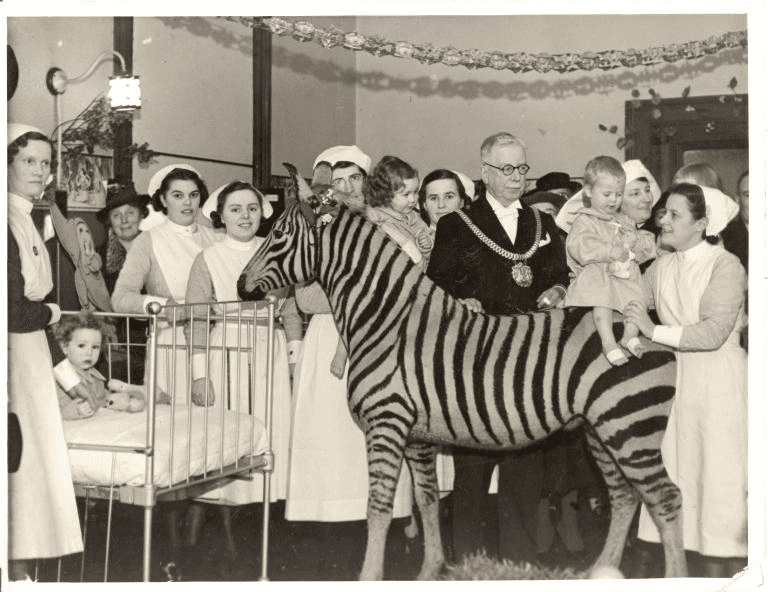
Particularly warm memories remain of Christmas celebrations on the wards. In the 1930s, nurses decorated the departments with Christmas trees, hung garlands, and gave presents to the children. Old photographs still serve as some of the most touching testaments to how the hospital tried to create an atmosphere of homely care even in difficult times. Many former patients and their relatives recall the kind nurses and doctors who worked in challenging conditions but treated the sick with immense humanity.
During the Second World War, the hospital operated under the constant threat of bombings. Staff repeatedly moved patients to shelters, and surgeries occasionally had to be performed under strict blackout conditions – much like in other medical institutions, such as the Royal Liverpool Children’s Hospital.
Although the building itself is no longer there, the old boundary wall still stands on Stanley Road – the only visible trace of the hospital. Today, Liverpool Stanley Hospital lives on in the memories of local residents, archive photographs, and the history of medical care in industrial Liverpool. It might not have been the most famous, but it was certainly one of the city’s hospitals closest to the people.