
Learn the Liverpool accent to be accepted as a local. Mention you’ve heard of The Beatles—the legendary band that emerged here. This is accurately what a tourist or expat heading to Liverpool might plan to do. And it is the quickest route to trouble, because there are unspoken rules here that must be respected. The website iliverpool.info will help you become more cultured and understand local etiquette, so pay attention!
Introductory Information: Locals Take Pride in Their City
Back in 2008, Liverpool became the European Capital of Culture. People could already get acquainted with the local culture then. But the capital of Merseyside still has to prove that it is not “England in miniature,” but sometimes even the opposite. For example, people here might loudly argue about football in a coffee queue; they always thank the bus driver, and the local accent for Liverpudlians is a matter of pride, not a joke.
To a tourist, the city might seem chaotic and overly emotional, but immigrants usually notice that Liverpool accepts “its own” rapidly. But only those who don’t act arrogantly and don’t try to reduce the city to a set of tired clichés about The Beatles and football.
Hence, a critical point that needs to be remembered: Liverpudlians are proud of their city and its culture.
In many British cities, local patriotism exists somewhere at the level of football matches or holidays. In Liverpool, everything goes much deeper. Locals genuinely perceive the city as a distinct cultural phenomenon with its own voice, humor, and even pace of communication. Historically, this is easy to explain: a major port, waves of Irish immigration, a working-class past, and a constant feeling of distance from the London center have shaped a recognizable urban identity and even certain political preferences.
University studies of Liverpool specifically note that for many residents, the Scouse dialect has become a symbol of local pride and a kind of marker distinguishing locals from outsiders. Because of this, Liverpudlians quickly notice a person’s attitude towards the city. Therefore, if a tourist arrives with the attitude “Let’s look at these weirdos with an accent,” a connection is unlikely to happen. But open and simple communication is highly valued. One Reddit user in a discussion about the city’s culture noted:
“People here are generally very friendly and constantly talk about the city and football. If you are open, Liverpudlians will quickly accept you as one of their own.”
Don’t Copy the Local Accent—Even “for a Laugh”!

After two pints of beer in a pub, a tourist or newcomer might utter something like: “Eeeh calm down, laa, giz a beeerrrr”—and this is probably the worst violation of local etiquette.
After this, the conversation in Liverpool can suddenly turn frosty, because it sounds like copying old comedy shows that have long become a tired cliché. The phrase calm down became popular after Harry Enfield’s comedy sketches back in the 1990s. To put it into perspective: it’s the equivalent of going to East London and saying “Alright, guv’nor?” in a terrible Cockney accent. It’s not funny or clever, just painfully stereotypical.
In a Hotels.com travel guide about typical tourist mistakes in Liverpool, they bluntly stated that copying the local accent or dialect is poor form:
“As tempting as it may be—just don’t do it. It’s impolite.”
But the tone itself is important. If a person asks about the accent, is interested in its history or new words—that’s fine. If it turns into cringy stand-up and mimicry, the effect will be roughly like a bad joke at a family dinner.
At the same time, Liverpudlians themselves know how to be self-deprecating. They love jokes about the city, football, or their own way of speaking. But this should be an inside joke for a group of close friends who can banter with each other as much as they want. From strangers, however, basic respect is expected.
Well, if you want to understand the Liverpool language, here is a cheat sheet:
| Word / Phrase | What it means in conversation |
|---|---|
| La | A friendly address to a friend or acquaintance (mate, lad) |
| Sound | Cool, okay, or thanks |
| Boss | Something really good, awesome, or brilliant |
| Giz a… | Give us a… (meaning “give me”, or “pass me”) |
| Made up | Very happy or pleased about something |
| Ta | A quick “thank you” |
| Bevvy | Alcoholic drink or a trip to the pub |
| Scran | Food |
| Calm down | A stereotypical phrase associated with Scousers from 90s TV |
| Ed | Short for “head”, used to address someone (like “mate”) |
| Proper | An amplifier: very, really, or genuine |
| Baltic | Freezing, cold weather |
| Lad / Lid | Boy, friend, mate |
Don’t Forget Politeness in the Little Things
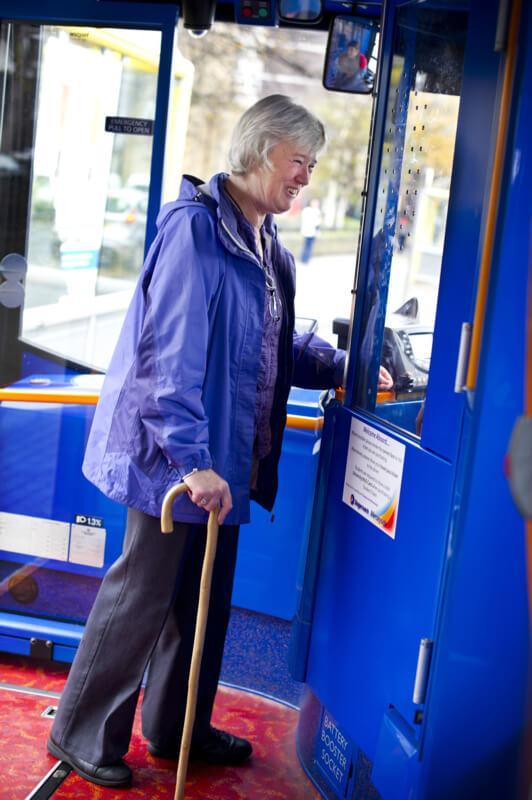
A possible scenario: you got off the bus without thanking the driver. No big deal? Absolutely not. A Liverpudlian might think (or even say to the person next to them): “Ah, another ill-mannered tourist who doesn’t know our rules!”
A passenger originally from the city might argue passionately on the bus about football or politics, but when getting off, they will still automatically toss the driver a quick “Cheers, mate.” This is such a customary part of daily life that its absence is noticed almost immediately.
In general, British politeness is built on small things, and in Liverpool, this is especially noticeable. Queues, constant “sorrys,” quick thanks to the cashier or barista—all this acts as a social lubricant, without which the mechanism starts to creak. People here strike up conversations with strangers much more easily, so rudeness or a cold tone stands out rapidly.
Thank everyone: the bus driver, the train conductor, the hotel receptionist. This rule is not officially written anywhere, but its violation is noticed by everyone; people in queues become especially attentive to etiquette. In Liverpool, the social distance is shorter than in many other British cities. It’s easy to chat with a stranger about the weather, football, or the queue in the supermarket itself. But if you forget the minor pleasantries, you risk ending up on a blacklist.
Don’t Pretend to Be a Football Pundit if You Aren’t One
Another possible epic fail for a city guest.
“Your boys had an absolute shocker on Sunday, didn’t they?”
“I’m an Everton fan, not a Liverpool fan!”
“Wait, are those different teams?”
To a tourist, this might sound like an innocent mix-up. For a person from Liverpool, it’s roughly like telling an Italian that pizza was invented in New York.
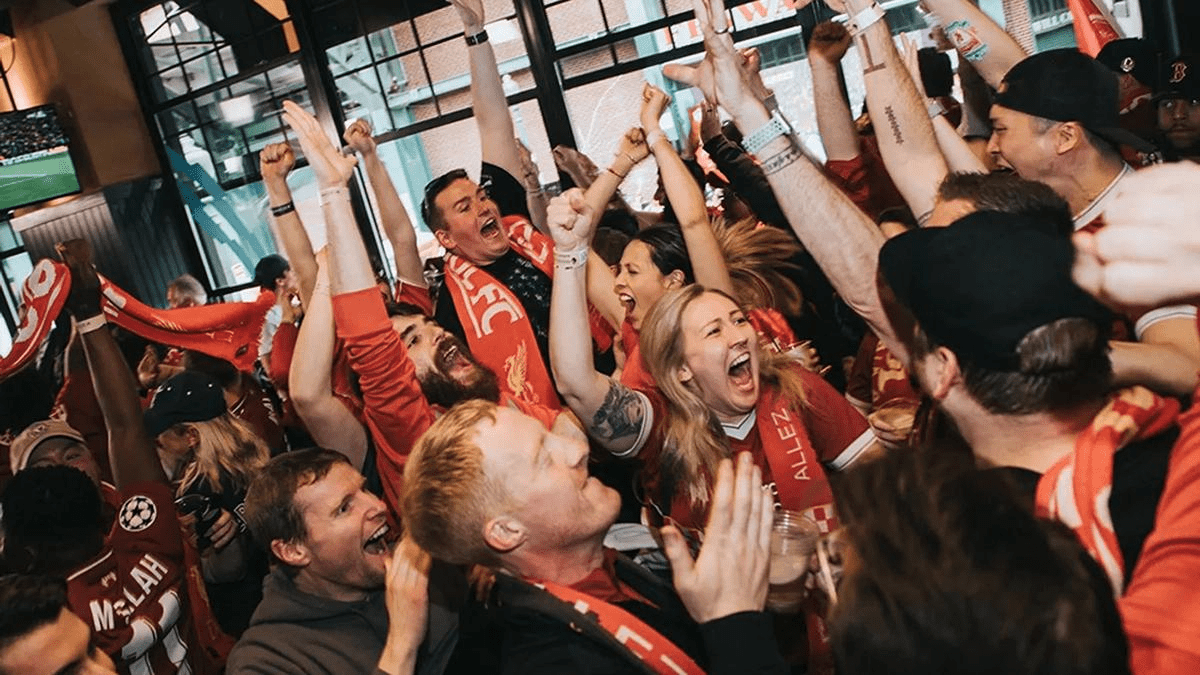
Football in the city means much more than just a game. Liverpool and Everton influence neighborhoods, pubs, family histories, and even the atmosphere in a taxi after a match. Moreover, the rivalry between the clubs is often much calmer and friendlier than in many other footballing cities in England. In Liverpool, it is perfectly normal for people in the same family to support different clubs. But you shouldn’t pretend to be an expert if you are far from this topic. Basic respect for the city’s football traditions is required.
A separate issue is so-called “football tourism,” which also receives a mixed reaction. Coming to a local team’s match is fine. Genuine interest in the history of the clubs is a plus. But treating the stadium merely as an Instagram backdrop is poor form.
Don’t Joke About the Sacred
And finally, Liverpudlians have things you’d better not joke about. You might not fully understand their emotion or position, but outright mockery here will be taken terribly.
- The boycott of The Sun newspaper following the Hillsborough stadium tragedy. The city remembers how the tabloid smeared Liverpool fans and peddled lies about the tragedy for years. Because of this, even buying this newspaper can instantly make you an unwelcome conversationalist. And the phrase “Are you still offended by that publication?” will easily turn any conversation very tense. For Liverpudlians, this is an incredibly sensitive and personal story, a deep sense of injustice.
- Left-wing views. If you hold right-wing views—simply don’t engage in dialogue on this topic; otherwise, you are guaranteed to run into a heated argument.
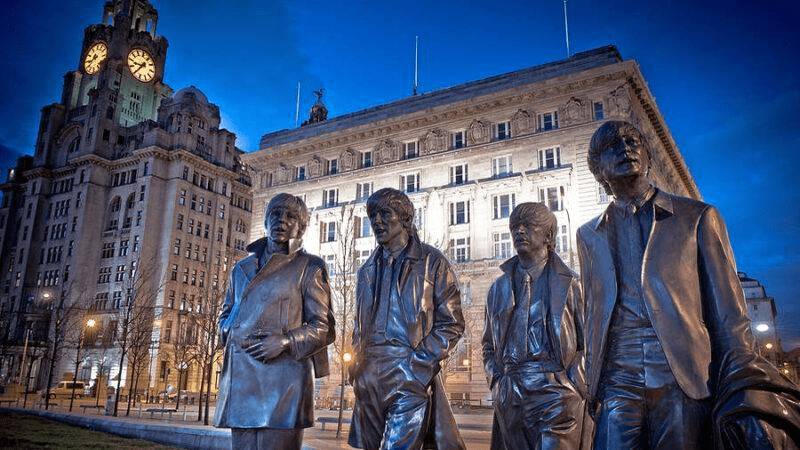
- The Beatles. Yes, Liverpool is fine with tourists who come for the “Beatles spots.” But phrases like “Oh, is this the city where The Beatles started?” sound roughly like jokes about a baguette and a beret in Paris.
- Comparisons with London. Comments like “Well, it’s certainly not London here” are almost guaranteed to create an awkward silence.
This overview mostly touched on the question of “what not to do?”, but the topic can be summed up with positive unspoken rules. Respect the local culture. Be polite in the little things. Show interest, but avoid mindless stereotypes.