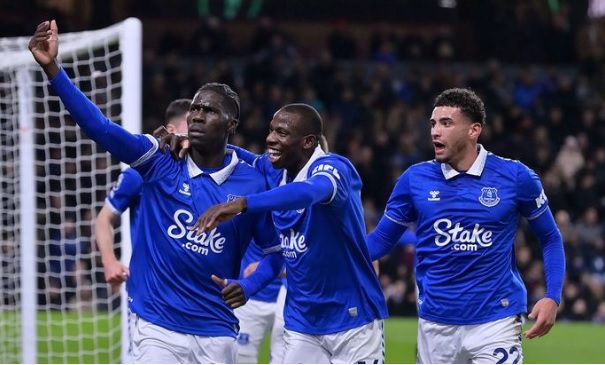

England is considered the birthplace of modern football, and Liverpool is home to two world-class clubs. Everton is often overshadowed by the city’s, and Britain’s, most successful club, but its history is truly remarkable. Since 1878, over a century has passed, and during that time (at the time of writing), the club has only spent four years outside of the top flight. It also boasts numerous trophies. This article on iliverpool.info will tell you all about the main events in the Toffees’ history, their highs and lows, and many other interesting facts.
About Everton’s name, crest, and kit
Everton Football Club’s name comes from the Liverpool district where the club was founded. The district itself got its name from the combination of two Old English words: eofor, meaning “boar,” and tun, which translates to “farm” or “settlement.” Thus, the historical meaning of the name “Everton” can be understood as “boar settlement” or “boar farm.”
Everton’s crest has undergone numerous changes throughout its long history but has always symbolised the club’s strong ties to its home city. The club’s first crest was a shield divided into four sections. The top left corner featured the club’s initials, EFC, a black castle symbolised Liverpool, and laurel wreaths hinted at victories and achievements.
In the 1930s, the crest was simplified: it became a blue shield with white club initials. However, a key turning point in the emblem’s evolution came in the 1970s when the famous Prince Rupert’s Tower—a well-known historical symbol of the Everton district—was added to the crest. The tower was placed in the centre of a blue shield, with the club’s name added above it.
In the modern era, the crest has been modernised. It has retained its main symbol—Prince Rupert’s Tower—but has become more streamlined and elegant. This tower is closely associated with the club, serving as a reminder of its achievements and connection to the old city.
As for their traditional kit colours, the home design originally featured various shades of blue and white. In 1878, Everton adopted their iconic combination of a blue shirt with white shorts, which has seen only minor changes throughout the club’s history. For example, in the early 20th century, the club added a white V-neck collar to its blue shirts, a feature that remained for decades. In the 1970s, Everton used various collar styles, including round and polo necks. Other changes related to sponsors.
The club has had more variety with its away kits, which have included white, yellow, and even pink away shirts, often paired with contrasting shorts.
Key events in the history of Everton FC
Everton Football Club has a rich history that began in 1878 with the founding of a team called St. Domingo’s FC. Just two years later, the club was renamed “Everton,” a name that has remained unchanged for decades.
In 1888, Everton became one of the 12 founding members of the Football League, the world’s first professional football competition. Just three years later, the club won its first English top-flight title (1891). They had to wait until 1906 for their next trophy, when the team lifted the FA Cup for the first time.
It’s an interesting fact that before moving to Goodison Park, Everton played at Anfield. The stadium was only handed over to Liverpool’s use in 1892.
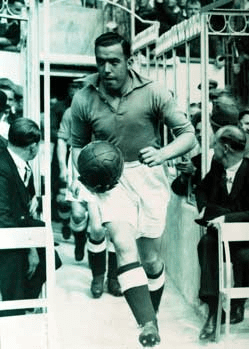
In the 1920s, the club tasted victory again when legendary forward Dixie Dean joined the team. His 60 goals in the 1927-28 season, which remains the record for the English top flight, helped Everton secure another league title. In 1933, the club won the FA Cup in the Wembley final, and Dean remains the club’s all-time top scorer.
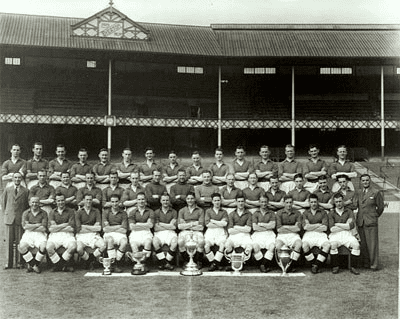
After the Second World War, the club went through a difficult period, but with the appointment of Harry Catterick as head coach in 1961, Everton reclaimed their former glory. Under his leadership, the club won the league title in 1963 and surprised everyone in the 1966 FA Cup final by staging a comeback against Sheffield Wednesday. After going down 0-2, the Toffees were able to turn the tide of the match in their favour.
The most successful period was the mid-1980s under manager Howard Kendall. In 1985, Everton won the UEFA Cup Winners’ Cup and the league title, marking their first-ever “double.” The Premier League, however, proved to be a tough nut to crack for Everton, as they had little success there.
Their only major trophy in the 1990s was the FA Cup in 1995. However, David Moyes’s tenure in the 2000s brought stability back to the club, culminating in a fourth-place finish in the 2004-05 season and an FA Cup final appearance in 2009. From then on, Everton FC has remained one of England’s most famous clubs, loyal to its traditions.
The greatest managers and players in Everton FC history
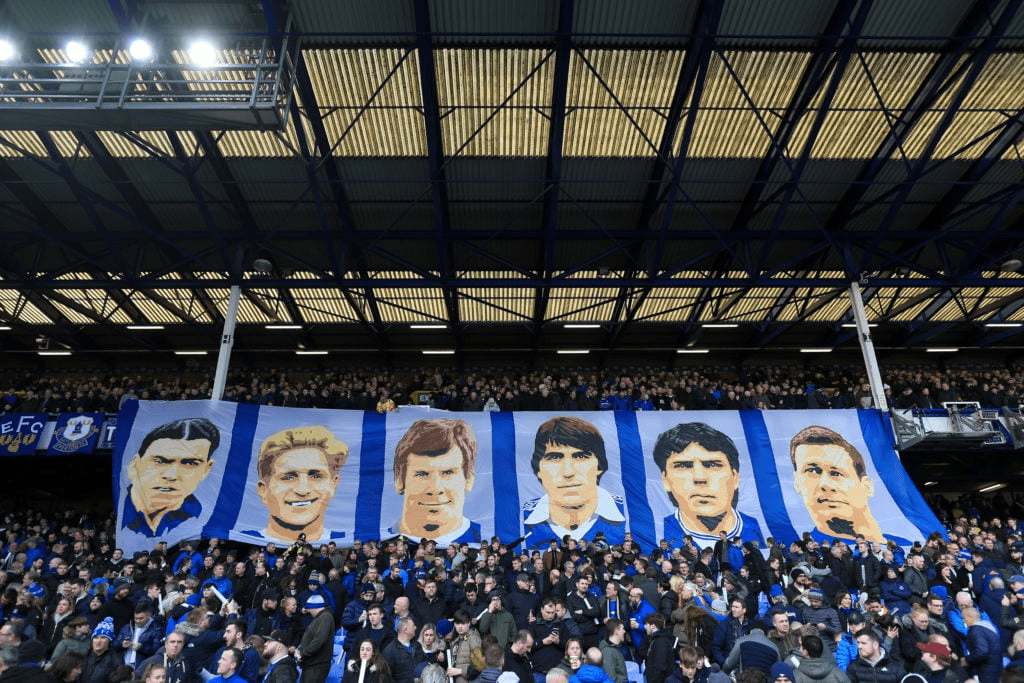
As you can see, Everton has a rich history, with trophies being just one of their achievements. The club is also famous for its outstanding figures among managers and players who were beloved by the fans.
Legendary managers
One of the club’s most famous coaches is Howard Kendall, who led Everton to the peak of success in the 1980s. Under his leadership, the team won two English league titles, the FA Cup, and the UEFA Cup Winners’ Cup. This period is considered the golden age in the club’s history.
Another iconic manager is David Moyes, who worked at the club from 2002 to 2013. He brought stability to the team, consistently securing high league finishes and leading them to the FA Cup final in 2009.
Legendary players
Among the players who left their mark on the club’s history, it’s impossible not to mention Dixie Dean. His record of 60 goals in the 1927-28 season remains unsurpassed in England a century later. Dean is the all-time top scorer in Everton’s history, with a fantastic record of 349 goals in 399 matches.
Another legendary player is goalkeeper Neville Southall, who was a key figure in the 1980s, helping the team win the trophies mentioned above. And we should also remember Alan Ball, a member of England’s victorious 1966 World Cup squad, who also made a huge contribution to the club.
In modern history, Everton gave the world players like Tim Cahill, the Australian midfielder known for his excellent aerial ability. Another high-level player who wore the Toffees’ colours was Leighton Baines, known for his play on the defensive flank and effective set-piece delivery. And it goes without saying that Romelu Lukaku, a truly outstanding forward, played for the club from 2013 to 2017, becoming one of the best Premier League goalscorers of the modern era.
Everton FC’s historical collection
Everton Football Club has a unique heritage embodied in its historical collection. It is considered the largest football collection in the world dedicated to a single club. It includes more than 18,000 items, including unique match programmes, tickets, photos, medals, and much more.
The collection also includes the club’s first-ever football contract, signed in 1886, and rare programmes from early games. Interestingly, Everton was the first English club to compete in Europe and has a huge archive of documents covering this event. The collection is stored at Liverpool Central Library, making it accessible for study and an inspiration to football fans and historians alike.