
When you gaze at the monumental streets of Gotham in The Batman, take in the 1940s Brooklyn docks in Captain America: The First Avenger, or wander through foggy Victorian London alongside Sherlock Holmes, chances are you aren’t looking at America or the British capital at all. You are looking at Liverpool.
Over recent decades, this port city has transformed into one of the world’s premier film sets. In the UK, Liverpool ranks second only to London in total filming volume, yet the paradox is that it almost always plays the role of other metropolises. Why Hollywood and global streaming giants choose Merseyside is explored in this detailed analysis on iliverpool.info.
An Architectural Chameleon: From Edwardian to Neoclassical
The primary driver behind Liverpool’s immense cinematic success is its colossal architectural wealth, which has turned the city into a universal film set. Outside of London, Liverpool boasts the highest concentration of Grade I and Grade II listed buildings in the United Kingdom. The unprecedented port prosperity of the 18th and 19th centuries left behind a monumental heritage that today allows directors to effortlessly recreate virtually any historical era or geographical location.
This remarkable capacity for visual mimicry relies on two unique architectural hubs that most frequently find themselves in the lenses of global filmmakers.
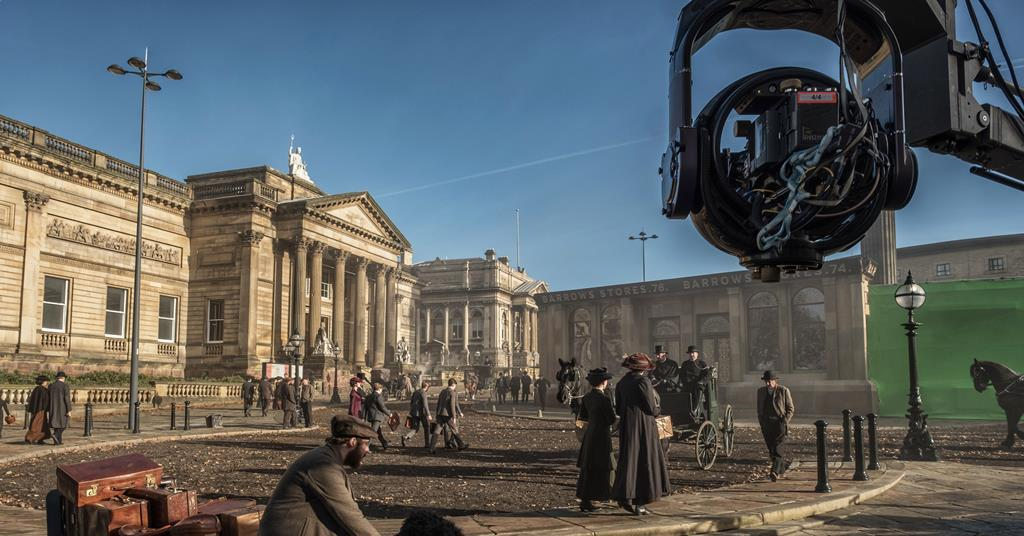
- The Imperial Grandeur of William Brown Street. Thanks to its densely packed, monolithic Neoclassical architecture—encompassing the Central Library, the World Museum, and the majestic St George’s Hall—this location serves as an ideal screen double. It regularly stands in for grand government quarters in London, Paris, or Washington, D.C., as its sweeping colonnades and Roman proportions flawlessly convey the spirit of great empires.
- The Authentic Landscape of Rodney Street. This street is an impeccably preserved Georgian thoroughfare, where long rows of characteristic dark brick townhouses with symmetrical windows and austere white porticos transport viewers back in time. The street regularly transforms into the residential quarters of late 18th- and early 19th-century London aristocracy, serving as a natural backdrop for period dramas and mystery films.
Such spatial flexibility enables Hollywood and British studios to significantly streamline production budgets by filming scenes set in different parts of the world within just a few city blocks. Liverpool has masterfully monetized its past, turning the stone-carved capital of port tycoons into a dynamic film industry where a single facade can hide Victorian New York or gloomy Gotham City.
How Liverpool Transforms into New York and Chicago
Recreating a European city within Europe is straightforward enough. However, Liverpool possesses a unique cinematic superpower: it can seamlessly convince audiences that the story on screen is taking place in the very heart of the United States.
This phenomenon of American transformation and convincing visual trickery stems from two key urban and industrial advantages.
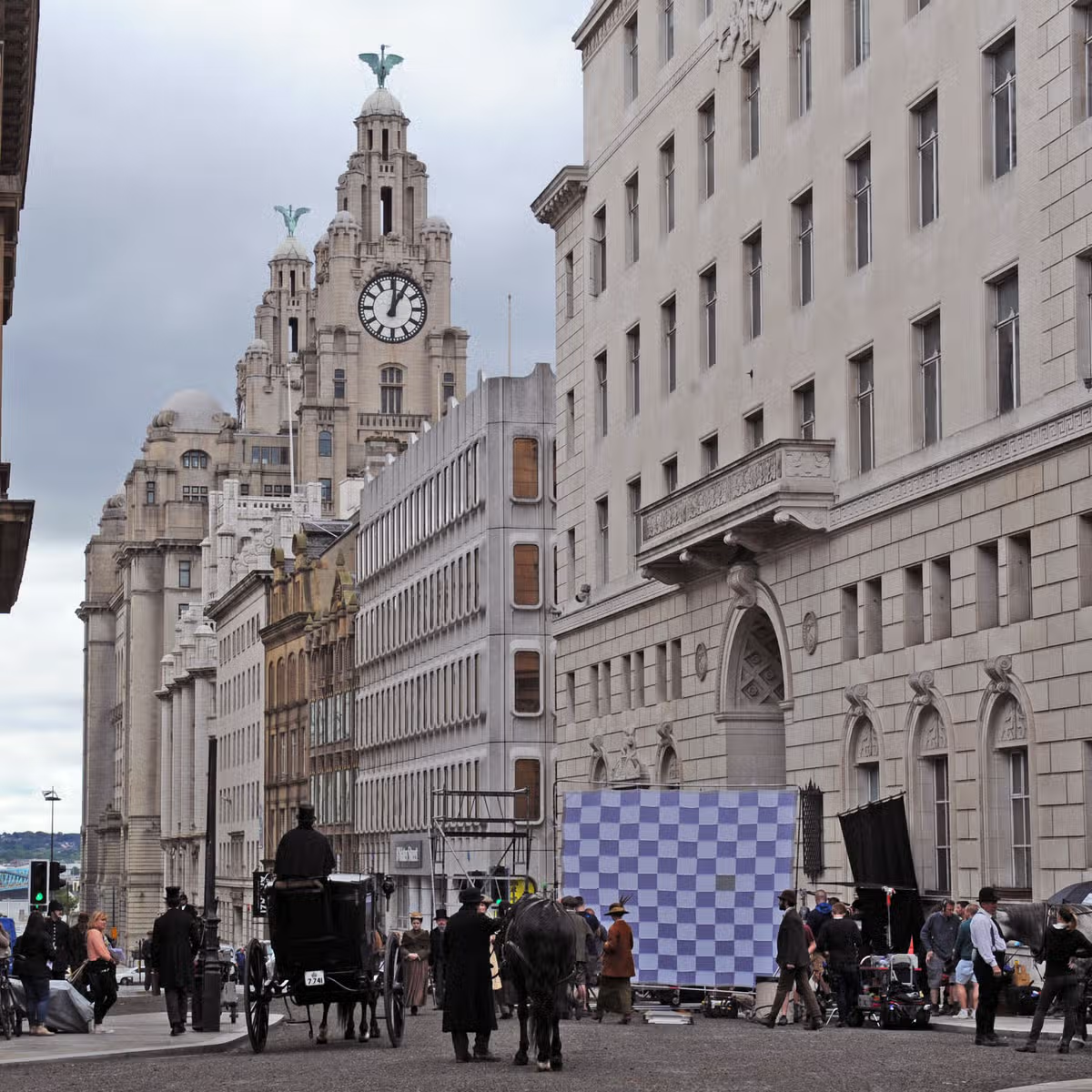
- American Layout and Scale. Liverpool’s commercial center was developed during an intense industrial boom, with architects consciously taking cues from financial districts across the Atlantic. Massive granite edifices such as the iconic Royal Liver Building, along with the urban canyons of Dale Street, feature the exact height, monumental rigor, and window cadence characteristic of early 20th-century Manhattan or Chicago architecture. This allows cinematographers to effortlessly capture classic American cityscapes.
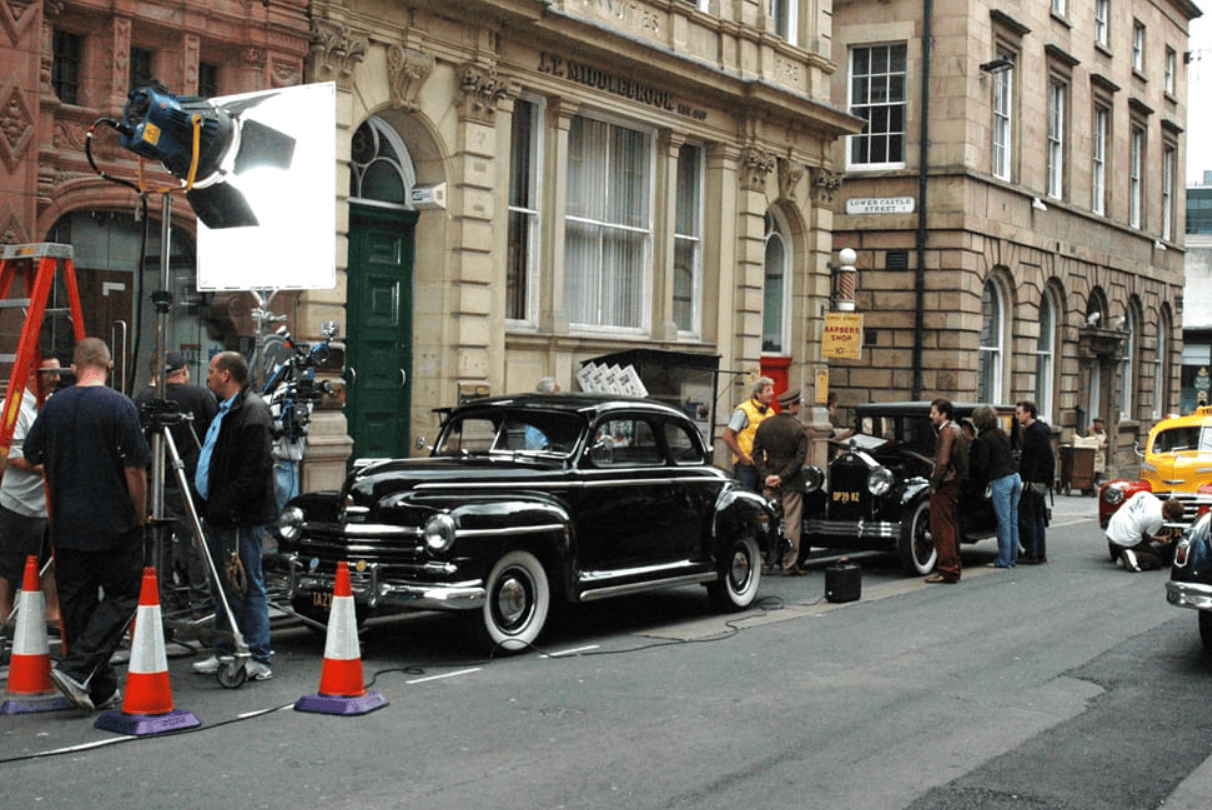
- Red Brick and Cast-Iron Textures. The monumental Stanley Dock complex, with its massive brick warehouses and authentic, slightly rusted iron structures, is visually identical to the old industrial districts of Brooklyn. This unique texture caught the eye of Marvel Cinematic Universe producers, who transformed Liverpool’s docks into 1940s Brooklyn streets for Captain America: The First Avenger. Achieving the illusion required minimal CGI—the crew simply brought in vintage yellow cabs, period vehicles, and American signage.
Thanks to this striking architectural resemblance, Liverpool has become New York’s primary overseas stunt double for global cinema. While audiences believe they are looking at gritty Brooklyn alleys or prestigious Chicago financial districts, Hollywood directors take full advantage of the English port’s adaptability—a city that once embraced the ambition and boldness of American architectural design.
Logistics Paradise and the Liverpool Film Office Factor
Filming on location in real-life London or New York is a logistical nightmare and a massive expense for any production company. Shutting down Times Square or Trafalgar Square even for a few hours causes an instant traffic collapse, making municipal authorities hesitant to cooperate. Pragmatic Liverpool turned this challenge into its major economic advantage.
The Country’s First Dedicated Film Office
In 1989, the city established the Liverpool Film Office—the very first specialized film commission in the United Kingdom. Operating as a one-stop shop for studio interactions with local government, it completely eliminated bureaucratic red tape. Rather than negotiating with dozens of municipal departments, producers handle all organizational arrangements through a single contact point, dramatically speeding up production timelines.
Unprecedented Administrative Flexibility
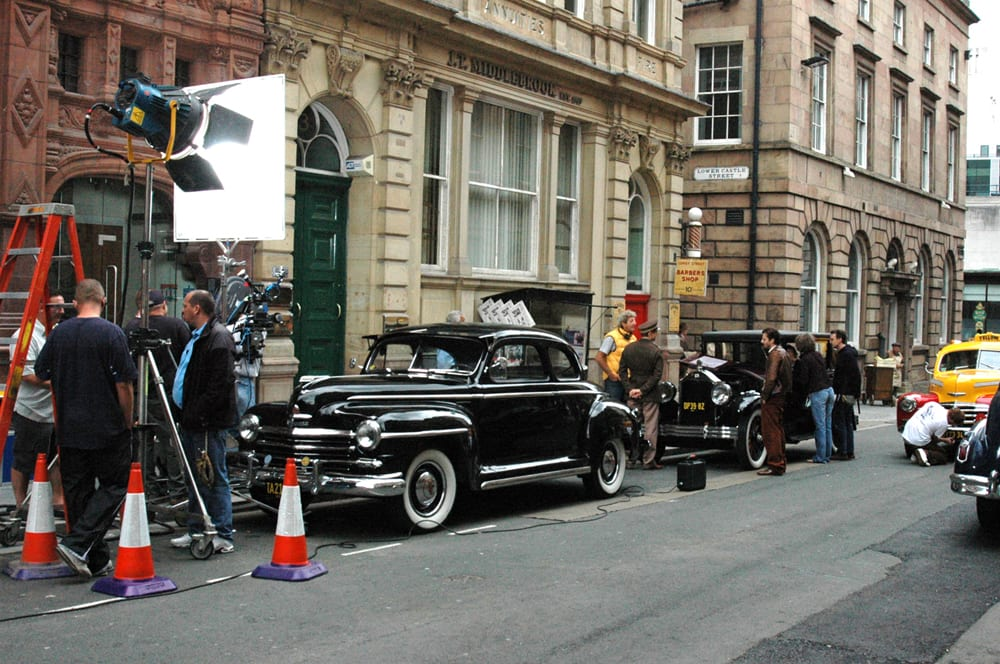
City authorities designed a streamlined permitting process. Local services are ready to shut down major arterial roads in just a few days, grant permissions for complex pyrotechnic stunts and vehicle explosions right in the historic center, or quickly repaint road markings and remove modern signs to meet the strict visual standards of 1930s America.
Production Budget Optimization
Beyond organizational ease, the region offers compelling financial incentives that prove decisive during location scouting. Overall production and operational costs—including large-scale set builds, venue rentals, equipment staging, and crew accommodation—are on average 30–40% lower in Liverpool than in congested London, making the city a top pick for major Hollywood studios.
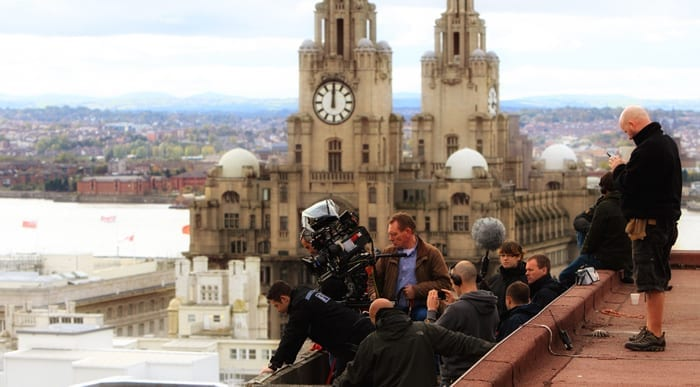
Iconic Transformations of Liverpool on Screen
| Film / TV Series | What Liverpool Played on Screen | Specific City Location |
| The Batman (2022) | Gloomy Gotham City | St George’s Hall (Gotham City Hall set) and the County Sessions House building |
| Captain America: The First Avenger (2011) | 1940s Brooklyn, New York | Stanley Dock (secret laboratory and chase scene) |
| The Crown | London and Washington, D.C. | Cunard Building (interiors and exteriors of high government offices) |
| Sherlock Holmes (2009, Guy Ritchie) | Victorian London | Stanley Dock and city underground locations |
| Fantastic Beasts and Where to Find Them | 1920s New York | St George’s Hall (transformed into New York’s Grand Central Station) |

Cinematic Capital
Liverpool’s transformation into the world’s leading film illusionist is no coincidence or lucky architectural accident—it is a result of calculated pragmatism. The city successfully monetized its historical legacy, turning the stone architecture of its port boom into a key driver of today’s creative economy. In an era of escalating production costs, Merseyside delivers a rare commodity: a seamless balance between absolute visual authenticity and logistical convenience.
The launch of The Depot—the city’s own purpose-built sound stages—is a game-changer. Liverpool is no longer just a convenient backlot for Hollywood; it now offers a full end-to-end production environment. The city’s ability to adapt to any script proves that its architectural boundaries exist only in the imaginations of directors, while Merseyside’s economic and cultural imprint on world cinema continues to expand.