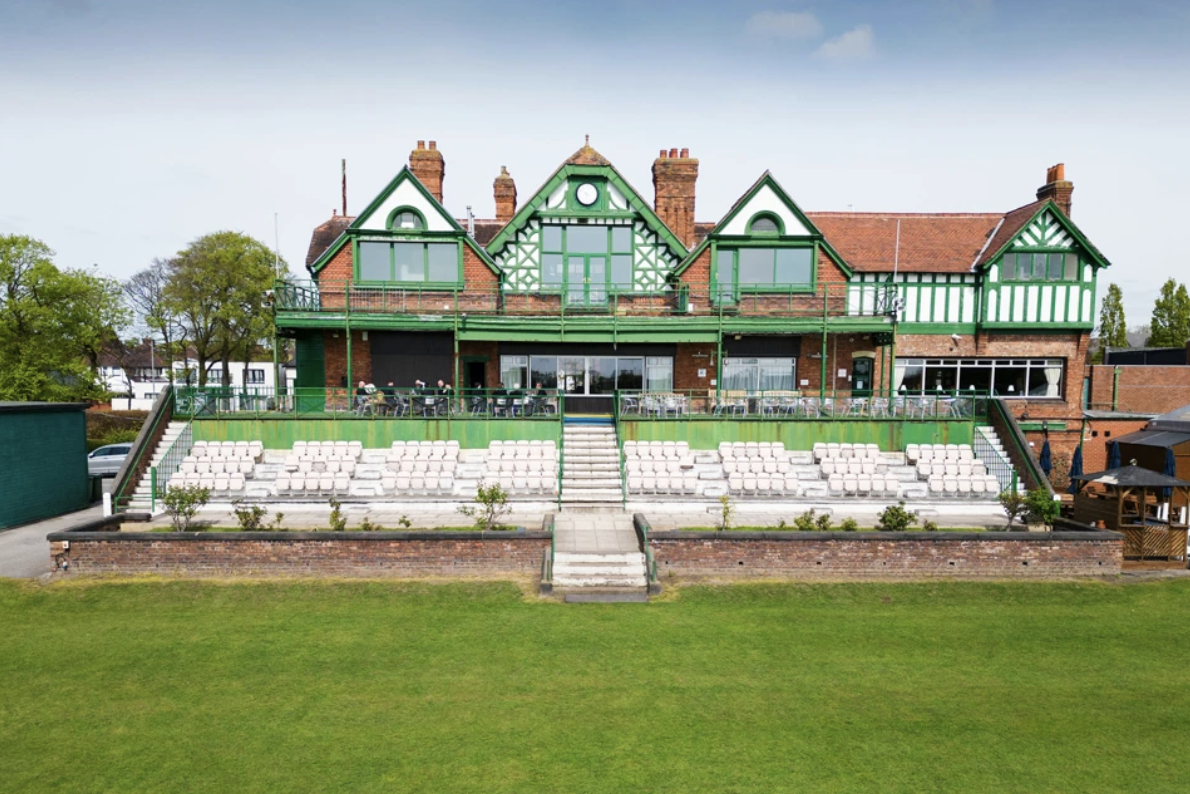

Aigburth, one of the city’s greenest and most affluent suburbs, stretches along the River Mersey just steps from the majestic Sefton Park—a picture-perfect backdrop for quintessentially English pastimes. Tucked away within these leafy surroundings is the subject of our feature on iliverpool.info: Liverpool Cricket Club. Founded in 1807 during the Napoleonic Wars, it proudly holds the title of one of the oldest amateur sports clubs in Merseyside and across the United Kingdom.
Wandering with Bat in Hand: Finding a Permanent Home in Aigburth
In its opening decades, Liverpool’s cricket enthusiasts were essentially nomadic. Early 19th-century sports infrastructure was virtually nonexistent, forcing players to drift from pitch to pitch in search of playable turf. These formative years brought daunting logistical challenges: amateur sport demanded substantial funding and a vast, permanent ground—a rare luxury in a booming industrial city.
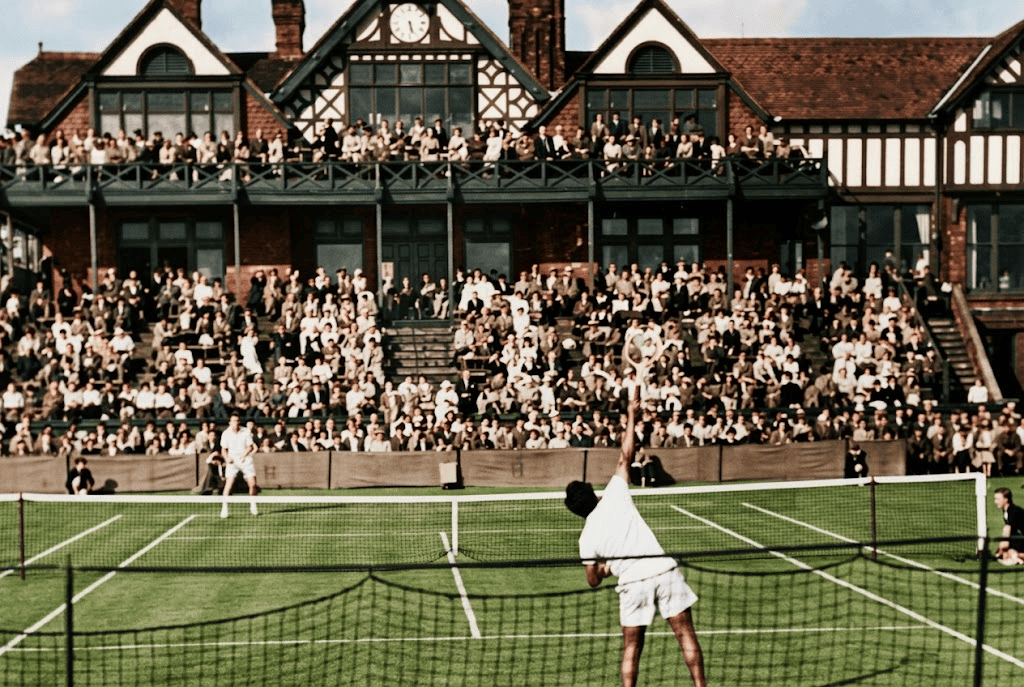
Long-awaited stability finally arrived in 1880, when the club permanently settled at its current ground on Aigburth Road. The new site perfectly matched the players’ rising ambitions. The move kicked off a string of historic milestones that laid the foundation for an elite sporting venue:
- 30 April 1881 – Teams took to the pitch for the inaugural match on the newly prepared ground.
- 13–14 June 1881 – The ground hosted its first first-class match, featuring Lancashire County Cricket Club against Cambridge University.
Remarkably, the club did not initially own the land. The ground had to be leased from a specially formed company whose shareholders included prominent members of Liverpool’s high society. Being tied to a lease hindered long-term development, prompting the committee to raise capital. In 1904, the club took a decisive strategic step by purchasing the freehold outright for £2,000. At the turn of the 20th century, this was a hefty investment—one that permanently secured Aigburth as a lasting home for generations of players.
Fish Scales, Half-Timbering, and Listed Status: The Iconic Pavilion
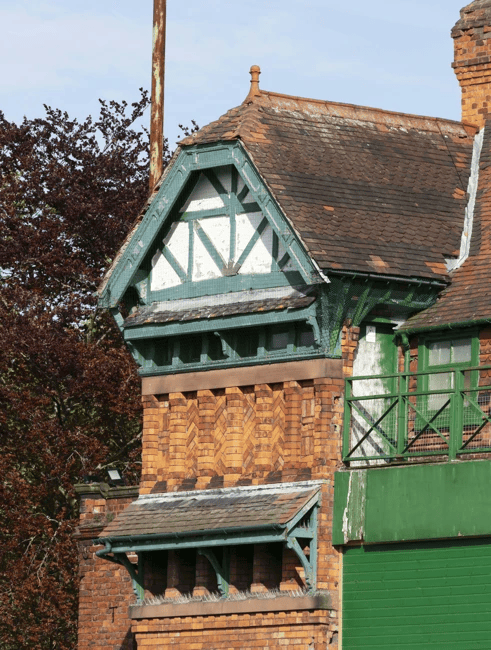
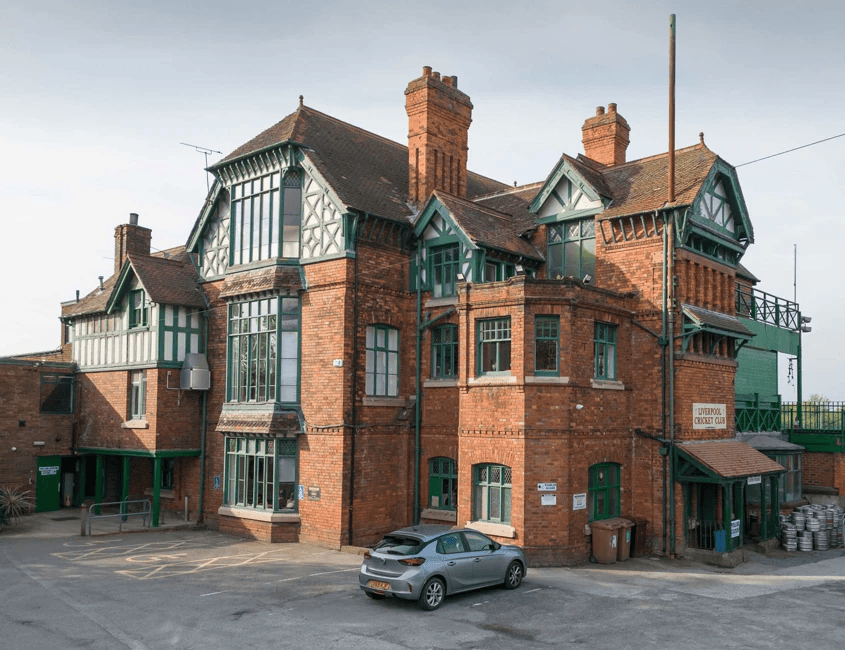
The crown jewel of the Aigburth ground is its architecture—specifically, the handsome Victorian pavilion erected in 1880. Designed by local architect Thomas Harnett Harrison and built by Cubitts, the project commanded a staggering budget: developing the complex along with its expansive playing field cost early investors £21,000. To this day, the sheer scale of the outfield commands respect among cricketers; by surface area, it ranks second in England only to London’s The Oval.
The pavilion stands as a striking example of the Vernacular Revival style. Harrison masterfully blended traditional red brick with decorative half-timbering and tile-hanging. The roof features distinctive fish-scale terracotta tiles, flanked by substantial chimney stacks rising above generous balconies. At its heart lies an expansive open veranda, where Liverpool’s high society could watch matches unfold in comfort over long summer afternoons.
Today, the building holds immense heritage significance as the oldest surviving first-class cricket pavilion in the United Kingdom. It predates iconic British venues such as Trent Bridge (1886) and Lord’s (1890). In recognition of its exceptional architectural and historical integrity, Historic England awarded the pavilion Grade II* listed status in June 2023.
Inside, the pavilion retains much of its original Victorian layout. The upper levels still house a former ballroom and a heritage billiard room, alongside a war memorial honoring club members who fell in service—turning the sports pavilion into a living chapter of local history.
Bradman’s Favourite Ground and World-Class Records
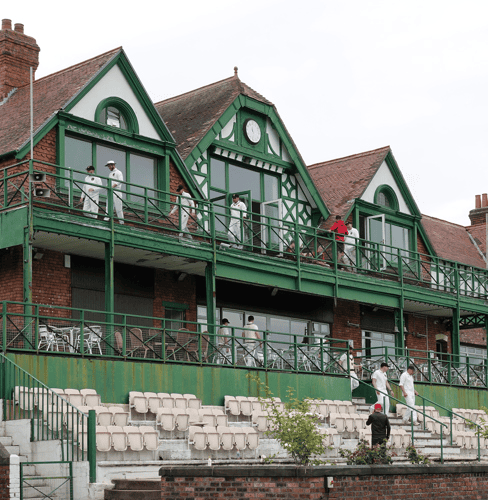
Historically, the Aigburth ground played a pivotal role as the premier outground for Lancashire County Cricket Club. Lancashire regularly staged County Championship fixtures here, particularly throughout the 1950s and 1960s. This enduring partnership proved crucial in 2011: with their home ground at Old Trafford undergoing major redevelopment, Lancashire transferred key fixtures to Aigburth. Harnessing the magic of the historic ground, they went on to clinch the County Championship title.
International acclaim arrived in Aigburth as early as 1896, when the ground hosted its first touring Australian team. In total, the Australians played here on eight occasions. Their 1930 visit remains particularly memorable thanks to the legendary Sir Donald Bradman, who later praised the Aigburth wicket as one of his favourite grounds in the world.
Subsequent decades produced a wealth of sporting drama and longstanding records. In 1932, Wally Hammond of Gloucestershire struck a staggering 264 runs against Lancashire. The 1984 tour match against the West Indies proved just as unforgettable, drawing over 7,500 spectators who witnessed a masterclass by Gordon Greenidge. The club also made cricket history in 1973 by hosting a match during the inaugural Women’s Cricket World Cup between an International XI and Trinidad and Tobago.
More Than Just Cricket: From Historic Thrashings to a Modern Multi-Sport Hub
Liverpool Cricket Club has never confined itself solely to the gentleman’s game. By the late 19th century, it was regularly hosting premier lawn tennis tournaments, staged in alternate years with Manchester. The turf has also witnessed plenty of hard-hitting rugby: Liverpool Football Club (Rugby Union) was based here for 80 years. In an extraordinary chapter of football history, the ground hosted Liverpool’s very first international match on 24 February 1883, when England routed Ireland 7–0 in front of 2,500 spectators. In its formative years, the illustrious Everton FC also took to the field here.
Today, the club’s expansive grounds reflect its stature as a premier multi-sport hub. Divided by a railway line, with the southern section devoted to rugby, the site boasts far more than just a colossal cricket pitch. Facilities include nine tennis courts, five squash courts, and immaculate greens and pitches for bowls, field hockey, and lacrosse. Operating as a self-contained sporting village with a vibrant social calendar, it offers membership packages tailored for both recreation and networking.
The club balances serious athletic pursuits with an active social scene. The spacious Peter McEvoy Lounge offers panoramic views across the playing fields and regularly hosts craft beer festivals, fine wine tastings, and high-profile international tennis events.
Its function suites—popular for weddings and private celebrations—honour prominent club figures. Foremost among them is Captain Noel Godfrey Chavasse, one of only three people in history to be awarded the Victoria Cross twice (VC and Bar). Today, one of the pavilion’s signature suites proudly bears his name.