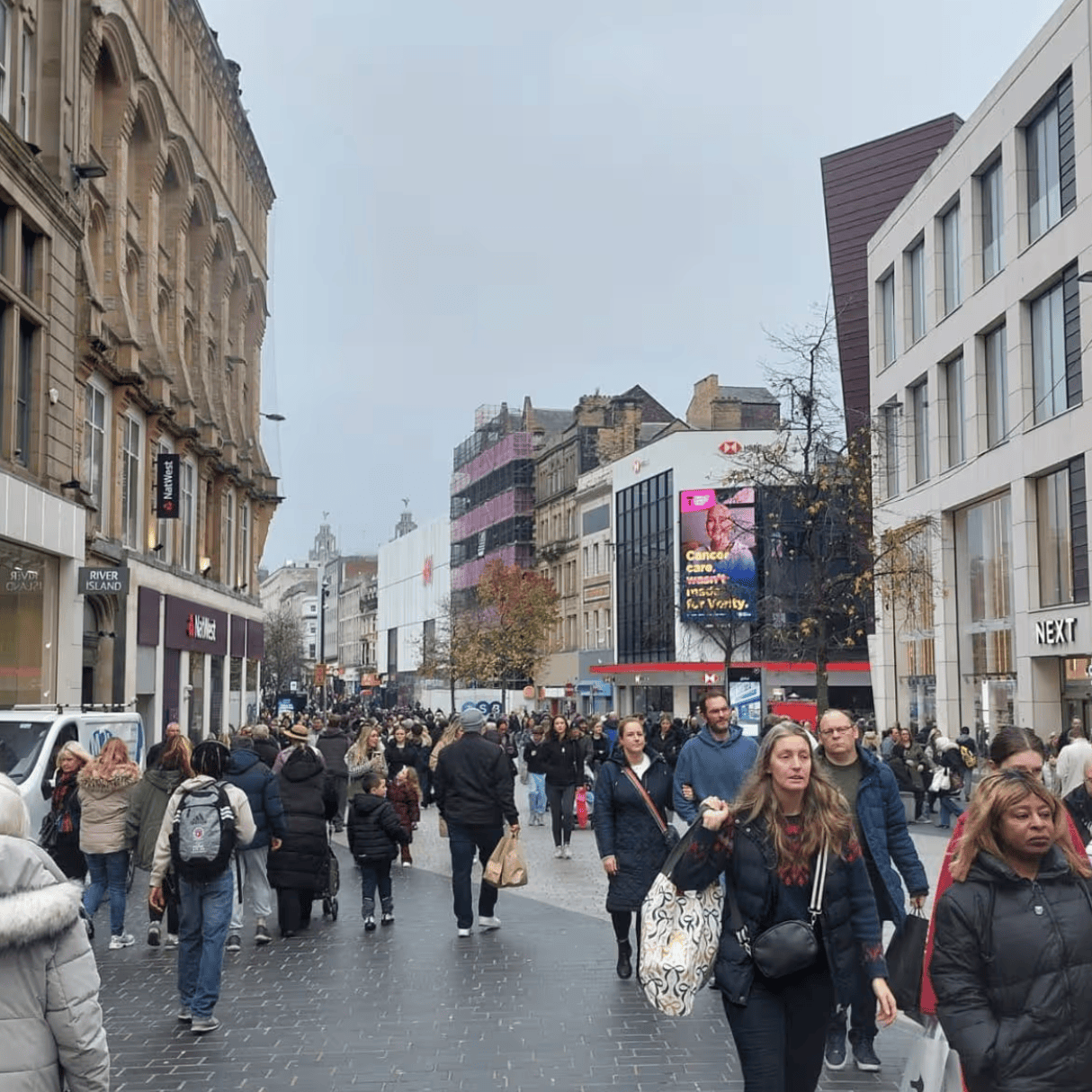

There is no other city in the UK quite like Liverpool. For the rest of the country, its residents are a distinct ethno-cultural ecosystem. They speak with a sharp, throaty accent, share a very specific sense of humor, and often say: “We’re Scouse, not English.”
This distinct identity, known as the “Scouse” phenomenon, is by no means a product of artificial marketing. It is the direct result of a unique—and at times brutal—maritime history, geographical isolation, and the melting of dozens of cultures in a single linguistic pot. Let’s dive into this fascinating story on iliverpool.info.
Etymology: From a Sailor’s Stew to an Ethnonym
The word “Scouse” originally had nothing to do with linguistics—it was born at the bottom of a ship’s cauldron. Its emergence and transformation reflect the harsh socio-economic history of a city where the food of the poor became the bedrock of local identity.
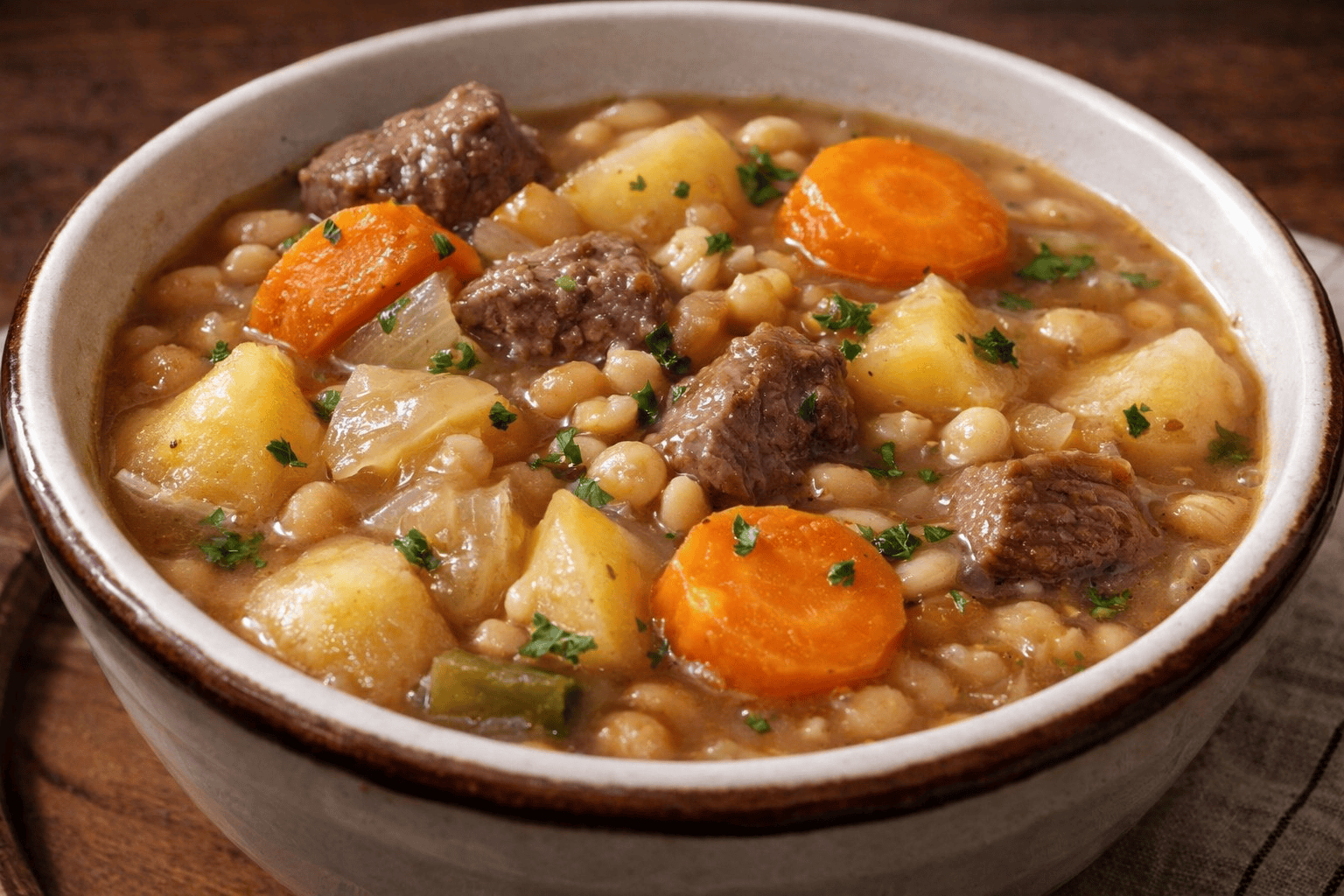
During the 18th and 19th centuries, Liverpool grew into one of the British Empire’s most powerful logistical hubs, handling colonial goods and massive migration flows. Merchant vessels from Northern Europe docked here in droves. Norwegian, Swedish, and Danish sailors lived on a cheap and highly filling dish called lobskouse (or lapskaus in Scandinavian). This was a thick, slow-cooked stew made from anything that wouldn’t spoil during long voyages: salted meat or cheap cuts, potatoes, ship biscuits, and onions.
For Liverpool’s multinational working class, who labored in the docks under brutal conditions for meager wages, this foreign recipe was a lifesaver. Local dockers, stoking crews, and the portside poor quickly adopted the dish because of its sheer affordability, instantly shortening the clunky foreign name to a punchy scouse. Throughout the 19th century, this diet highlighted the city’s social divide: the wealthy looked down on the residents of the port slums, dismissively labeling the Liverpool working class as “Scousers” because of their poverty and the distinct smell of this cheap stew.
Over time, however, the word underwent a classic sociolinguistic process of reclamation and appropriation. What had served for centuries as a tool of social degradation was turned by Liverpudlians into a badge of working-class and ethnic pride. The derogatory nickname for portside outcasts transformed into an official ethnonym. Today, “Scouse” is not just a stew still served in local pubs; it is the official name of a unique city dialect and the self-appellation of Liverpool residents, who fiercely distinguish themselves from the rest of traditional, conservative England.
A Linguistic Melting Pot: How the Accent Was Born
Until the mid-19th century, people in Liverpool spoke a standard Lancashire dialect—soft, with the typical Northern English long [a]. But the industrial boom of the port changed everything. The city experienced three massive waves of migration that completely wiped out the old phonetics and engineered an entirely new urban way of speaking.
This process of radical language blending and the formation of a completely new phonetic system took place across three distinct demographic waves.
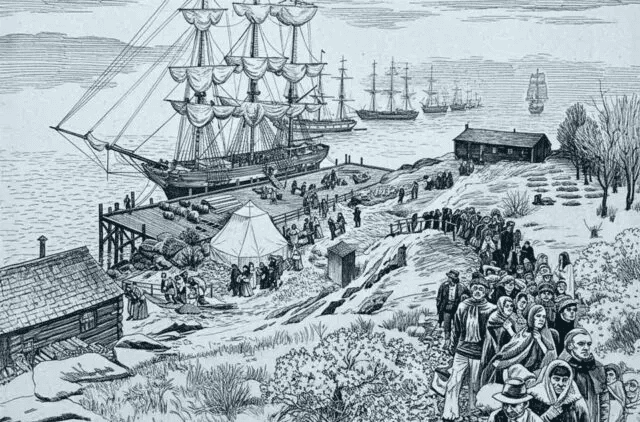
- The Irish Arrival (The Great Famine of 1845–1852). Escaping catastrophic starvation, hundreds of thousands of Irish people arrived at the nearest English port. Many settled in Liverpool permanently, taking on the grueling work in the docks. By 1851, one in four city residents was Irish. They permanently injected their distinct melodic lilt, expressive speaking style, and habit of heavily modifying voiceless plosives into the local speech.
- The Welsh Expansion. Alongside the Irish, thousands of skilled workers arrived from neighboring Wales—mostly builders and carpenters who constructed the new dock complexes. The Welsh language, historically rich in harsh guttural and fricative sounds, exerted strong pressure on the consonant system of the emerging Scouse dialect, adding its signature raspiness.
- Sailors of Global Routes. As a transit hub of the British Empire, Liverpool became home to thousands of foreign sailors. Scandinavians, Germans, and people from the Caribbean and China spent months in the dockside neighborhoods. This constant international chatter completely diluted classic English linguistic norms, turning portside slang into a blend of foreign loanwords and simplified grammatical structures.
As a result of this unprecedented demographic pressure, the city’s traditional Lancashire roots dissolved entirely. Scouse was born—a unique, isolated accent that, sociolinguistically and phonetically, ended up much closer to the Dublin variant of English than to the dialect of neighboring Manchester, located just 50 kilometers away.
This linguistic melting pot proved that geographical proximity in England means little when closed socio-economic barriers and massive migration flows come into play. Liverpool gained a voice that perfectly suited its rebellious portside soul—detached from classic English standards, tempered by hard labor, and forever marked by global influences.
Sound Anatomy: Why Scouse Sounds the Way It Does
Scouse is unmistakable due to its unique phonetic markers. From a linguistic perspective, the most significant transformations include:
- Fricativisation of the [k] sound. This is the most famous feature. The [k] sound at the end or in the middle of words turns into a voiceless velar fricative—a sound similar to the Scottish [ch] in loch or German Bach. The word book sounds like booch, and chicken sounds like chichen.
- Loss of interdental sounds (Th-stopping). The [th] sounds almost completely disappear. Instead of [ð] (as in the, there), Scousers say [d] (de, der). Instead of [θ] (as in think, thing), a sharp “t” is heard (tink, ting).
- A Unique R. The [r] sound is not dropped or softened as in standard British Received Pronunciation, but is realized as an alveolar tap [ɾ]—similar to a quick Spanish [r], which is once again a legacy of Irish and Welsh influences.
| Standard English Word | Scouse Pronunciation | Phonetic Approximation |
| Look | [luːx] | Looch (using the Scottish ‘ch’) |
| That | [dat] | Dat |
| Nothing | [nʌtɪn] | Nuttin |
| Girl | [ɡɛːl] | Gairl (with a soft lilt) |
“Us Against Them”: The Psychology of Port-City Isolation
The maritime past shaped not only the language but also a distinctive Liverpool mentality built on a unique socio-cultural code. Throughout the 19th and 20th centuries, life in the city was entirely dependent on the docks. This meant grueling, physically exhausting, and highly unstable casual labor, where no one had guarantees for tomorrow. Such a harsh economic reality forged an ironclad working-class solidarity and a deep culture of mutual aid. If you didn’t support your neighbor today, your own family risked starving tomorrow.
This tight-knit cohesion and the development of a unique Liverpudlian worldview were sustained by three powerful geopolitical and social factors.
- An Atlantic Outlook. Geographically wedged between the River Mersey and the Irish Sea, Liverpool has always looked outward—facing the Atlantic, New York, and Dublin, rather than inland toward England itself. Historically, London was perceived (and often still is) as a distant, detached, and culturally alien capital that cared nothing for the chronic struggles of a port city.
- Thatcherite Deindustrialization as a Turning Point. The mental estrangement from the rest of the country sharpened dramatically during the 1980s under the harsh economic policies of Margaret Thatcher’s government. The closure of the docks and rapid deindustrialization led to catastrophic unemployment, poverty, and social unrest. While the city found itself isolated, it survived through fierce resilience and a unique defensive humor (Scouse wit), known for its lightning-fast speed, biting self-deprecation, and survivalist cynicism.
- Resistance to Assimilation. Having faced decades of economic and political pressure from the establishment, Scousers turned their dialect into their ultimate shield of self-identity. Rather than smoothing over their speech to fit standard British norms, they deliberately preserved and emphasized their phonetic differences, turning the accent into a definitive marker of belonging versus being an outsider.
The Scouse phenomenon is living, uncompromising proof of how geography and economics can carve out a distinct culture from scratch. The Liverpool dialect did not just fail to assimilate; it actively refused to blend in with the rest of England. Its roots remain firmly anchored to the port pilings, the salty sea air, and the millions of dramatic migrant stories of those who once stepped ashore seeking a better life, giving the city its unmistakable, proud, and rebellious voice.