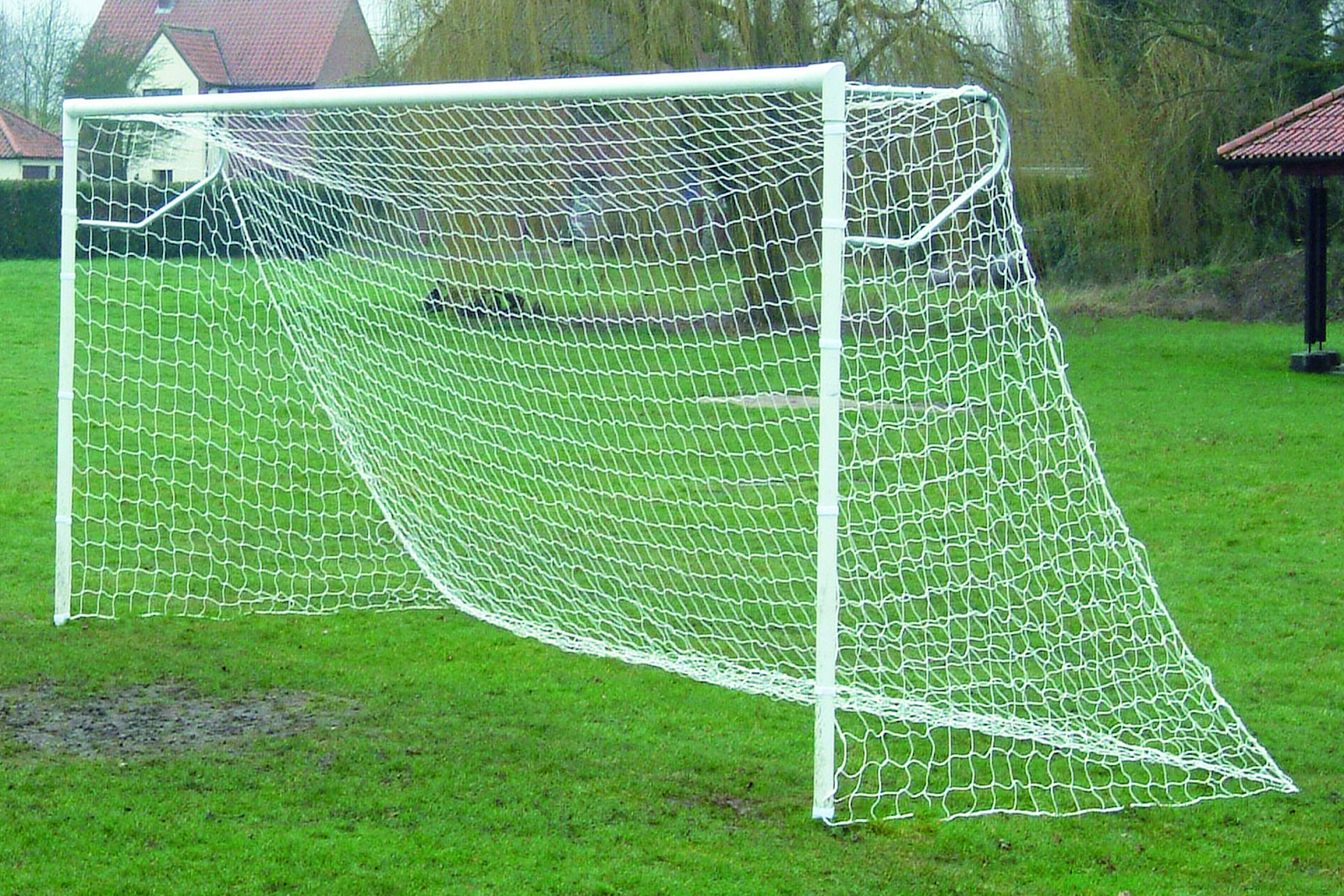

Today, we can’t imagine football goals without the net that keeps the ball in play. However, few people know that it was designed by a Liverpudlian, John Alexander Brodie, who made a significant contribution to the development of the world’s most popular sport. We discuss the history of his invention further on iliverpool.info.
A Brief History of Football Nets
There was a time when goalkeepers stood in front of a simple metal frame. If the ball went into the goal, it could end up far beyond the pitch, much like it does now when it goes out of play. But something about this wasn’t right. After scoring a goal, a striker wants to see the ball bulge the back of the net – it’s a far more satisfying feeling. Furthermore, nets help to avoid arguments about which side of the post the ball went. In the heat of the moment – with the old goal design – not everyone could see clearly.
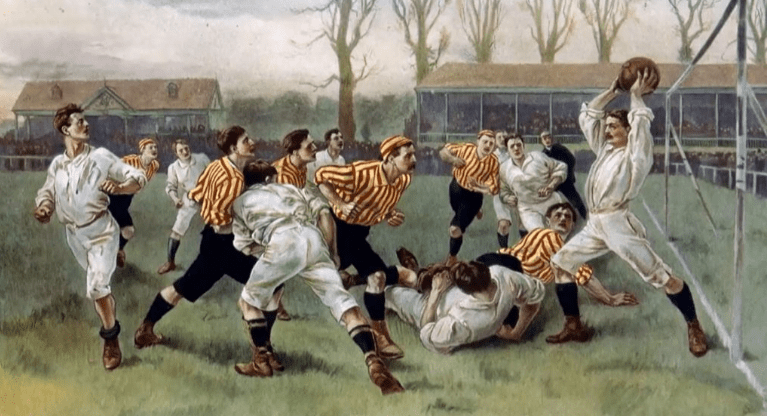
In the 1800s in England, the birthplace of football, there were attempts to develop nets that would keep the ball in play. However, they didn’t look very good. Initially, nets were made of coarse rope and placed at the edges of the pitch, rather than on the goal frame itself. The idea was to prevent the ball from travelling too far out of bounds and to discourage some players from running into the stands.
John Brodie, however, came up with a more practical and aesthetically pleasing design, which he was the first to patent as an innovator. It consisted of two metal hoops connected by a net, stretched between two posts. We have written in detail about this inventor here. Therefore, we will now focus specifically on the history of the football net’s creation.

Football Goals and Nets in 19th Century England
It’s hard to believe now, but until the end of the 19th century, goals on the pitch consisted of just two vertical posts without any crossbar. One can only imagine the number of disputes and misunderstandings caused by very high shots between the posts that were impossible for a goalkeeper to save! Should such a goal be awarded or not? Often, these goals were given. Eventually, however, the crossbar was introduced. This happened in Sheffield in 1882, and from then on, football clubs were obliged to use one.
Of course, there were many other grey areas in the rules of football in the 19th century. Even the width of the goal – 8 yards – was only officially established in 1863. As for a height limiter, some clubs used a rope or tape, but these were just experiments. Different clubs did things differently, which led to confusion and arguments. In the 1880s, the height of the goal was fixed at 8 feet above the ground.
The next challenge was to figure out how to keep the ball in play after a goal was scored and to ensure everyone could clearly see that it had passed between the posts. The first attempts to use nets occurred slightly before Brodie’s invention. For example, a friendly match in 1887 between Preston North End and Hyde, which ended 26-0, is known to have used nets made of hemp. Brodie also used this same material; it would be several decades before it was replaced by nylon.
The Backstory to Brodie’s Invention
The main problem was clearly confirming a goal, as there were many disputes about whether the ball had gone in or flown past the post. Unlike today, there was no option to watch a replay or use computer technology. One such situation arose on 26 October 1889, during a match between Everton and Accrington. The referee at Anfield recorded the score as 2-2, but the Toffees’ fans were convinced the referee had disallowed a perfectly good goal for their beloved team. Local newspapers at the time ironically questioned the official’s eyesight.
Although it is said that Brodie, an Everton fan, was at the game and created his invention as a direct result, there is evidence that John had already conceived the idea of a “pocket” behind the posts two months earlier. He chose a net, possibly inspired by his love of fishing. It’s also possible the innovator decided a net was a better option than tarpaulin or boards because it provided good visibility for the spectators. Brodie’s earlier designs even included bells that would sound when the ball hit the net, but this idea was later abandoned.
Brodie’s Work and Its Consequences
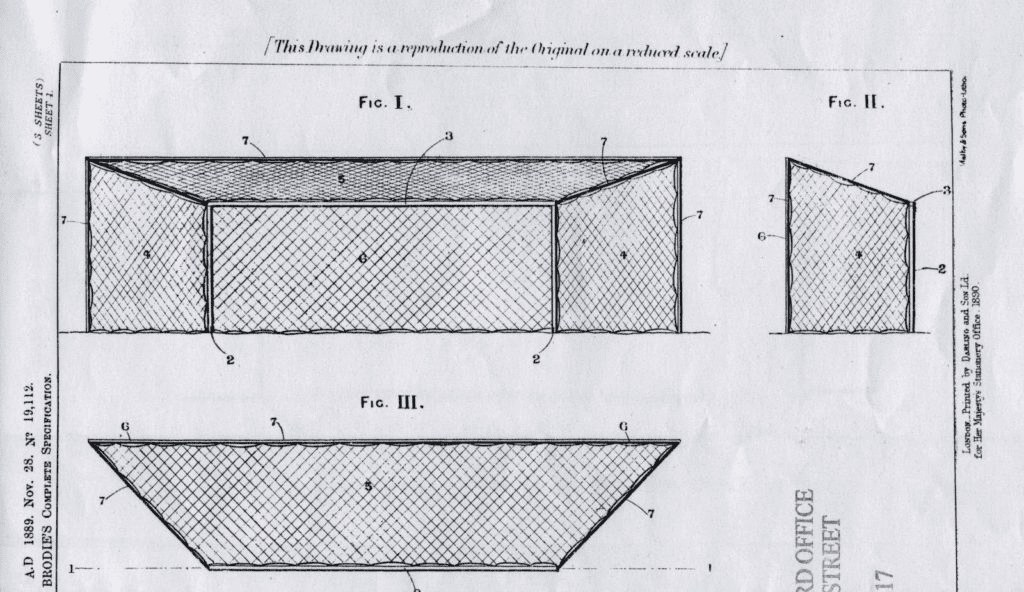
Now for the invention itself. A patent application was filed on 28 November 1889, and it was granted a year later. An article in the Daily Post claimed it was a joint effort between John and his older brother, William. It seems William did not seek recognition or fame and remained in the background.
The Brodie brothers developed a kind of pocket into which the football would fall. This net greatly simplified the process of confirming a goal and was therefore approved by The Football Association. From September 1891, it became mandatory for use in league matches, and from 1894, in the FA Cup as well.
Initially, the nets were made of hemp and cost four shillings each. They were attached to the posts with metal loops and hooks. The innovation was universally liked, and John Brodie’s company began to manufacture them. In 1923, it sold 60 sets of goalposts and nets to Wembley Stadium. The first official use of nylon football nets was not recorded until 1934. And now, the classic football phrase, “The ball is in the back of the net!” exists thanks to the invention of a Liverpudlian.