
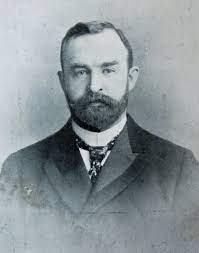
Liverpool has been a fertile ground for countless inventors, engineers, and scientists. Beyond its homegrown talent, the city has also attracted many gifted individuals who arrived to make their mark and build their careers in various fields. Today, we’re shining a spotlight on civil engineer John Alexander Brodie, renowned for his pivotal contributions to urban development in Liverpool. You can delve deeper into his life and work on the iliverpool.info website.
Early Life and Education
Born in 1858 in Bridgeport, the future engineer began his career working concurrently with his studies in the engineering department of the Mersey Docks and Harbour Board. He then received a scholarship to study mathematics at a college in Manchester, followed by a practical training stint at Joseph Whitworth’s office.
Brodie’s Inventions: The Football Goal Net
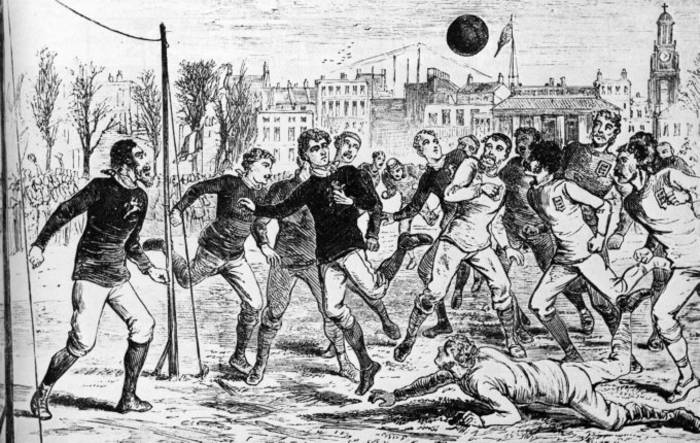
An avid sportsman, Brodie enjoyed playing golf and rugby. This passion directly led to an invention he was incredibly proud of – the football goal net. It’s hard to imagine modern football without it, and we have John Alexander Brodie to thank.
Brodie was also a dedicated Everton fan. In 1889, he attended a match where his beloved team scored, but the referee, having missed the moment, disallowed the goal. This incident infuriated Brodie, prompting him to devise a solution to prevent such occurrences in the future. Thus, the football goal net was born. Its primary purpose was to trap the ball, leaving no doubt about a goal. The net was first used in Liverpool in 1889, and Brodie patented his invention in 1900.
A Major Contribution to Road Development
In 1898, John Brodie arrived in Liverpool, taking on the role of city engineer. He immediately began using his talent and skills to improve the urban landscape.
Among his groundbreaking proposals were Britain’s first orbital road, electric trams, and the country’s first intercity connection.
Notably, Brodie pioneered a new system for road planning. He believed that traffic should flow along a dual carriageway, with tram lines occupying the central section. This innovative layout became the blueprint for constructing new boulevards and was later adopted for road construction in Manchester.
Brodie also championed the construction of buildings using pre-fabricated reinforced concrete slabs, presenting his visionary idea at the “Cheap Cottages” exhibition in Letchworth Garden City.
The Mersey Tunnel – Brodie’s Greatest Engineering Feat
In 1934, the Mersey Tunnel, connecting Liverpool city centre to Birkenhead under the River Mersey, was completed. Brodie dedicated nine years to this monumental project, collaborating with engineer Basil Mott. At the time of its completion, it was the longest underwater road tunnel in the world, holding that record for 24 years.
In his personal life, Brodie was married and had four children: two sons and two daughters.
John Alexander Brodie, the celebrated engineer, passed away in November 1934. In recognition of his immense contributions, the city authorities named a street in his honour – Brodie Avenue.
John Alexander Brodie left an indelible mark on the development of Liverpool. His inventions continue to serve people decades later. Of course, many other talented and distinguished individuals have graced our city, but that’s a story for another time.
We hope you found this article insightful and gained a deeper understanding of our beloved city.
What do you know about Engineer Brodie? Are you familiar with the history of the famous Mersey Tunnel’s construction? We’d love to hear your thoughts in the comments on social media. Your feedback is important to us!