

Medicine is an indispensable part of our lives, but like everything, it has its own history and beginnings. Once upon a time, Liverpool boasted the highest mortality rate in the country. However, thanks to the dedication of numerous medical professionals and scientists, the situation significantly improved. Today, we’re delving into the fascinating history of healthcare development in Liverpool. You can find out more on the iliverpool.info website.
Dreadful Living Conditions in Liverpool
In the 19th century, Liverpool was home to the second-largest port in Great Britain. This status naturally drew in vast numbers of people, merchants, and traders. Yet, the influx of sailors and immigrants didn’t solely boost the city’s economy. Liverpool became a breeding ground for various diseases, including typhus, cholera, and tuberculosis, which spread rapidly.
The situation was exacerbated by dire living standards; thousands of city residents lived in cellars and cramped, unventilated rooms. Infections thrived among the impoverished population, leading to widespread deaths. Health problems were compounded by the lack of running water and proper sanitation.
It became clear to Liverpool’s medical community and scientists that improving both living conditions and medical facilities was absolutely essential.
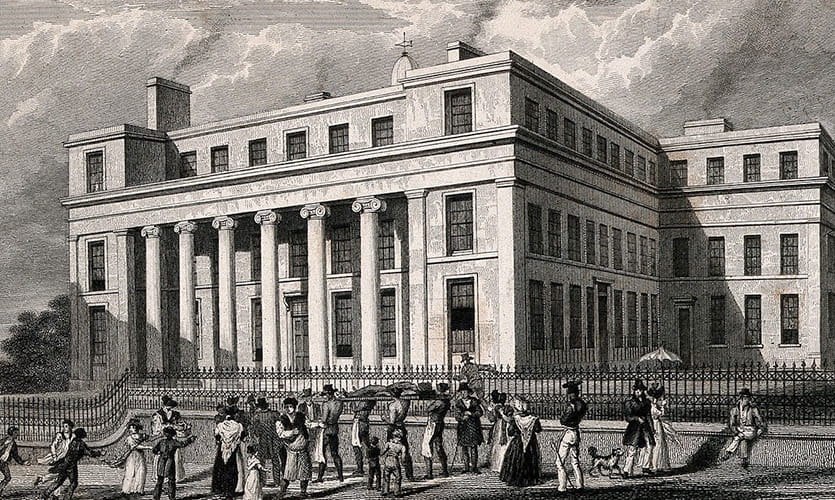
Improving Sanitary and Living Conditions for the Poor
In 1847, William Duncan was appointed as the country’s first Medical Officer of Health. This pivotal role saw him championing better living conditions for the poorer sections of society, understanding that where squalor reigns, health cannot flourish. Duncan initiated a programme to clean Liverpool’s streets and significantly improved both water supply and sewerage systems.
Fanny Louisa Calder also made a significant contribution to public health in the city. In 1875, she established the Liverpool School of Cookery. The school’s aim was to enhance the lifestyle of city residents, teaching them about nutritious food, hygiene, and personal care.
Robert Jones, a renowned innovator, focused on treating severely ill and disabled children. Jones firmly believed that sick children required inpatient care, excellent sanitary conditions, and fresh air. Through his persistent efforts, he achieved his goal, and in 1909, the Liverpool Country Hospital for Children in Heswall was opened.
Advancements in Medicine
Improvements in living conditions certainly yielded positive results. However, medical science in the city also progressed year after year.
In 1895, the first X-ray department in the country, and indeed the city, was opened at Liverpool’s Royal Southern Hospital. It was at this institution that the very first X-ray image was taken. Charles Thurstan Holland was one of the driving forces behind the establishment of “radiology” as a specialism in Liverpool.
He became the medical officer in charge of the radiology department at the hospital and expanded the scope of radio diagnosis.
Hugh Owen Thomas made an invaluable contribution to the development of orthopaedic surgery. He invented the now-famous Thomas splint, a device that could be applied to a broken femur to provide stability and prevent infection.
Thomas established a workshop where these revolutionary splints were created, transforming the treatment of bone and joint diseases. In the 1800s, surgical methods for fractures often led to shortened limbs, deformities, or even amputations.
In 1849, one of the first pharmaceutical schools in the UK was founded in our city. And in 1862, the School and College of Nurses and Midwives, a precursor to the School of Nursing and Allied Health at LJMU, was established. This institution was created because formally, nurses weren’t trained anywhere, as they weren’t considered vital medical personnel in the 19th century.
This is how medicine evolved in Liverpool. We hope you found this article engaging and drew valuable conclusions.