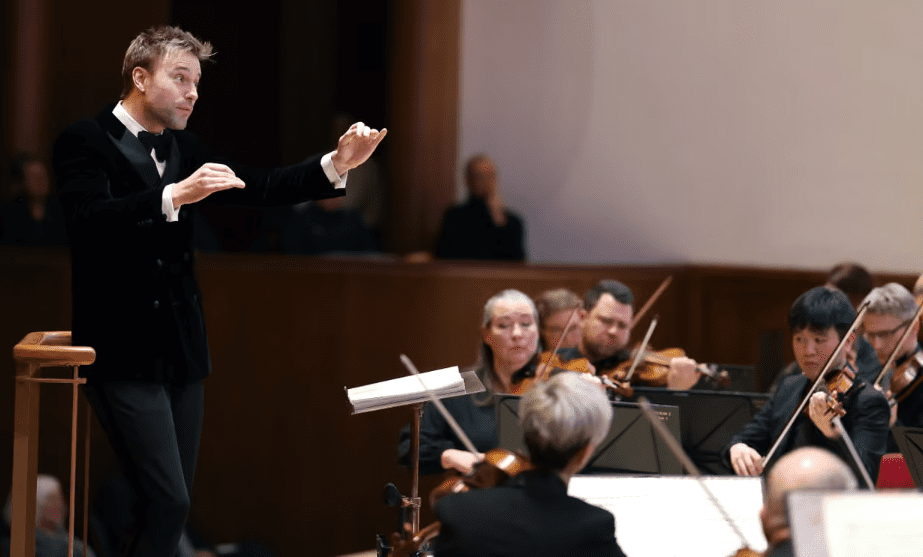

Did you know that in the city of The Beatles, there is an orchestra founded during the Victorian era? It is not often mentioned outside Britain today, yet it is one of the country’s most respected symphony ensembles. The Royal Liverpool Philharmonic has its own Art Deco-style concert hall, hosts hundreds of events annually, and continues to actively cultivate the city’s musical life. The history of this orchestra began with a small initiative by a group of enthusiasts and evolved into a national cultural brand. On iliverpool.info, we have gathered the most interesting facts about the Royal Liverpool Philharmonic Orchestra – a vibrant representative of local culture.
How the Liverpool Philharmonic Was Born
In 1840, several music lovers in Liverpool decided to establish a society that would organise regular concerts for the city’s public. The first performance took place on 12 March of the same year. This marked the birth of the organisation that would later become known as the Royal Liverpool Philharmonic.
Initially, the orchestra had no permanent venue: musicians performed in rented halls and temporary spaces. However, interest in the concerts grew, and by the late 19th century, the orchestra had become a key institution in Liverpool’s musical life. In 1933, the old Philharmonic Hall burned down, but the city quickly rebuilt a new hall – this time more ambitious, modern, and in the spirit of Art Deco.
In 1957, the orchestra was granted official “Royal” status – a sign of recognition for its significant contribution to the nation’s culture. By then, the Philharmonic had already established a reputation as an authoritative symphony ensemble, collaborating with European-level conductors. These included Max Bruch, Sir Malcolm Sargent, and in the 20th century, Libor Pešek and Vasily Petrenko, who in 2006 became the first conductor from the post-Soviet space to lead a British orchestra.
Today, the Philharmonic remains active, modern, yet closely connected to its traditions. Its history spans over a century of music, change, and major concerts.
Art Deco and Sound: What to Know About the Philharmonic Hall
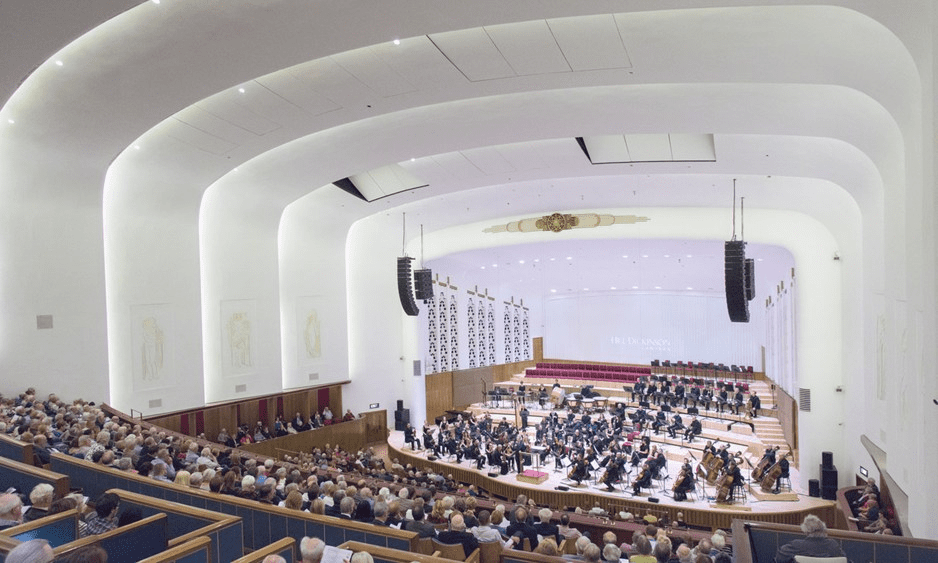
At the junction of Hope and Myrtle Streets in central Liverpool stands a building that is hard to miss – tall, concise, with a façade that glows with a soft, warm light in the evening hours. This is the Liverpool Philharmonic Hall, an architectural gem of the Art Deco era and the home of the Liverpool Philharmonic.
The current building emerged in 1939. The previous one was destroyed by fire, which became the impetus for constructing a new building, designed by Herbert Rowse. The architect incorporated geometric features of modernism and a very “live” acoustic into the hall. The venue seats 1,700 spectators, and even in the most distant seats, there is a sense of closeness to the stage.
In addition to the main stage, the Philharmonic has several other spaces: the intimate Music Room, the cosy Green Room, and several rooms for various events and activities. It is a fully-fledged musical home where Beethoven, jazz, film screenings, and children’s shows can coexist.
The building is listed as a Grade II architectural heritage site of Great Britain. And although it looks quite austere, inside, the visitor is greeted by a space with a warm atmosphere, perfect for music – from chamber pieces to a full orchestral complement.
The Orchestra Today: Who Creates the Philharmonic Sound
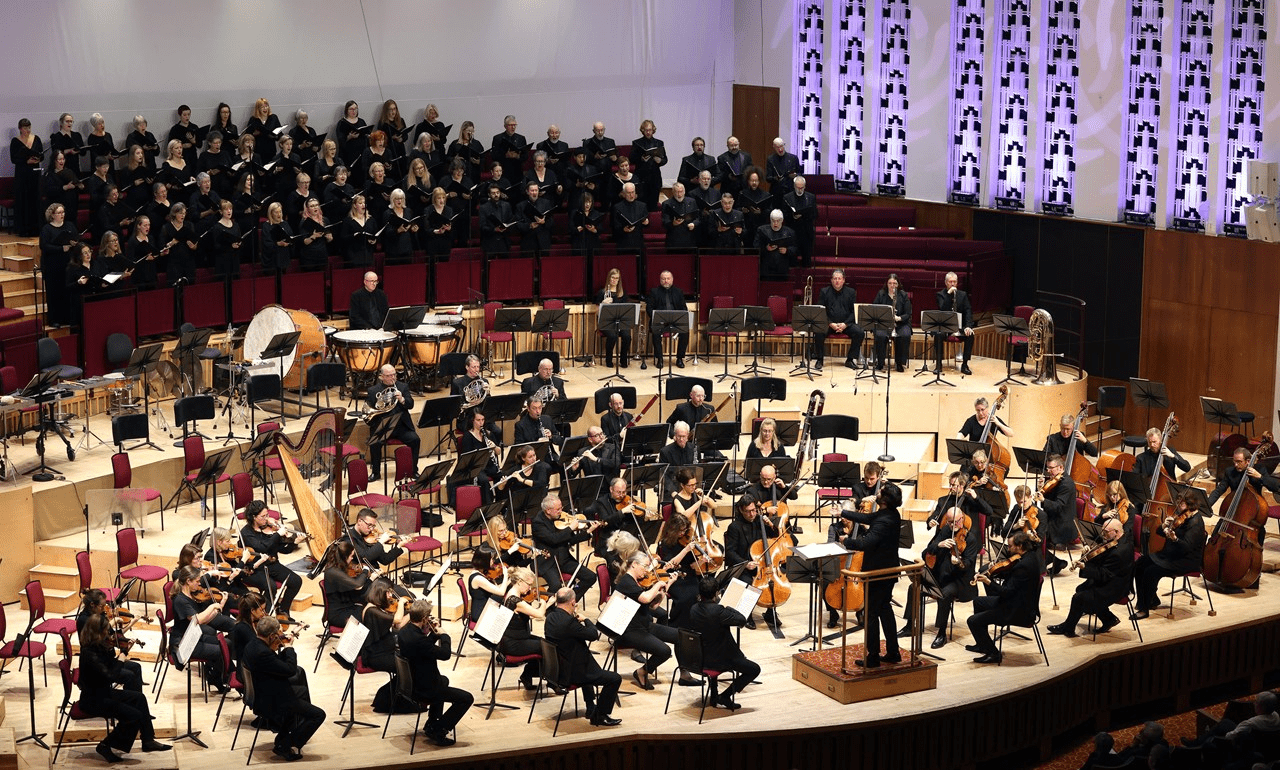
The Royal Liverpool Philharmonic Orchestra is the heart of the entire institution. It shapes Liverpool’s reputation as a city with deep musical roots. For over a century and a half, this ensemble has maintained a high standard – while constantly changing with the times.
Today, the orchestra’s Chief Conductor is Domingo Hindoyan – a Venezuelan maestro who joined in 2021. He has added more expression and Latin American energy to the ensemble’s sound without losing British composure. Under his direction, the orchestra performs both the “great canon” of Mozart, Brahms, and Mahler, as well as premieres by contemporary composers.
Of course, the Philharmonic is not just the main stage. Under its auspices, there are youth ensembles, children’s programmes, the chamber ensemble Ensemble 10/10, which specialises in new music. There is also the Royal Liverpool Philharmonic Choir and a whole series of educational projects for schools and the community. Incidentally, the fact that choral culture is well-developed in Liverpool is also evident in the example of the Welsh Union.
The orchestra regularly tours, participates in international festivals, releases recordings, and is actively streamed online. Yet, despite this, it remains deeply rooted in its city – playing concerts for Liverpool schoolchildren, performing at local events, and participating in charitable initiatives.
Repertoire and Events: Not Just Symphonies
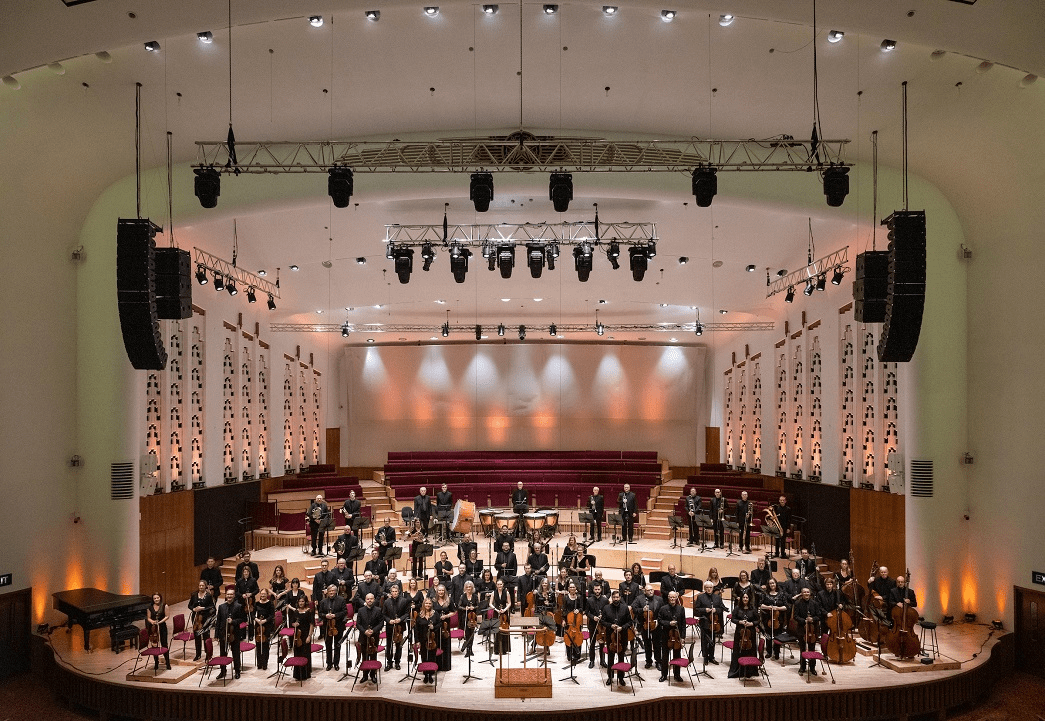
Although symphonic music remains the core of the Philharmonic’s activity, the orchestra’s repertoire and the concert hall’s programme are much broader. Here, you can often hear Tchaikovsky or Sibelius – and literally the next evening catch a show with Motown classics, a jazz night, or a film screening with orchestral accompaniment.
The Philharmonic plans classical concerts in advance – usually with a seasonal programme that covers works from various eras and styles. For instance, the repertoire for 2025–2026 includes Mahler’s Ninth Symphony, Grieg’s concerto with pianist Alexandra Dariescu, and the Music of the Americas cycle. World-class soloists are often invited, and new works commissioned specifically for the orchestra are performed.
At the same time, popular music concerts are also held here: from tributes to The Beatles or ABBA – to live performances by contemporary British bands. In the Music Room, the smaller hall, there are acoustic sets, chamber jazz, stand-up, or singer-songwriter evenings.
A separate part of the repertoire is events for children and families. These include interactive concerts with hosts, shows based on fairy tales or holidays, such as Spooktacular! for Halloween or Christmas evenings with carols.
In this diversity, the Philharmonic’s philosophy is clearly visible: to be not a museum of classical music, but a venue where music is live and accessible.
A Cultural Symbol and Open Environment
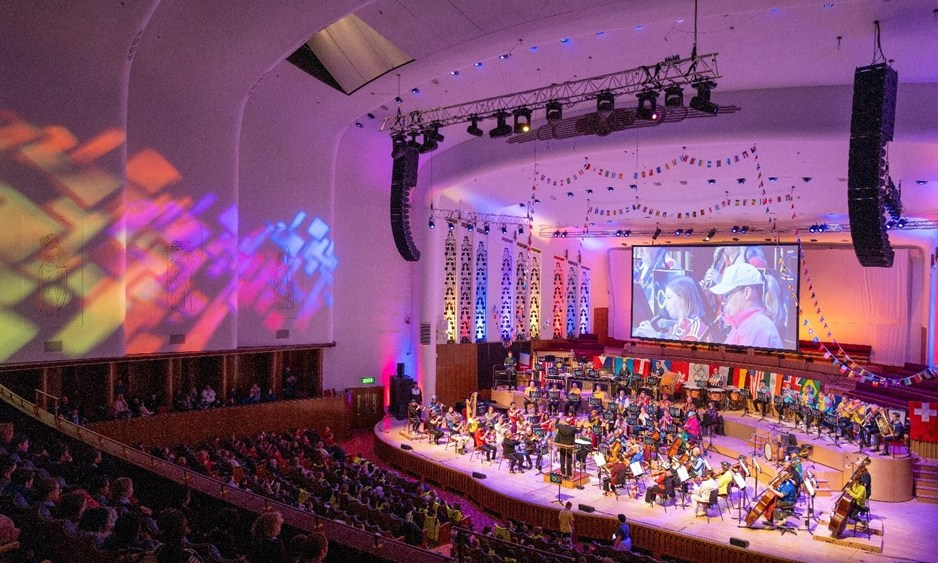
In the city that gave the world The Beatles, musical identity is not limited to rock. The Liverpool Philharmonic is another, deeper layer of urban culture that was formed long before the 1960s and remains vibrant today. They do not shut themselves up in an ivory tower – they build connections: between genres, generations, and communities.
The Philharmonic has long gone beyond the concert hall. It collaborates with schools, runs educational programmes, invites young musicians, and supports inclusive initiatives. Its musicians play in hospitals, sing with children, and participate in events in the city’s districts. This is not a temporary PR campaign, but part of daily practice.
At the same time, this place always guarantees high-quality music. Conductors from Berlin, pianists from New York perform here, and premieres of musical works are heard. But all these events take place in a hall easily accessible from Lime Street, where tickets can be as low as £10, and the audience comes not only in evening wear but also in work jeans.
The Royal Liverpool Philharmonic Orchestra is a part of the city’s culture. Its concerts are accessible, live, and relevant. They sound like a conversation with someone for whom music is not background noise, but a way to feel. The orchestra relies on a genuine connection with those who come to enjoy true art.