

Ashworth Hospital is a high-security psychiatric facility located in Maghull, Merseyside. It is part of the Mersey Care NHS Foundation Trust and is one of only three high-security psychiatric hospitals in the United Kingdom. On iliverpool.info, we’ll explore its history, location, and various interesting facts about its patients and the conditions in which they are treated.
Key Facts About Ashworth Hospital
Ashworth Hospital provides treatment for patients with serious mental health conditions, which can include schizophrenia and personality disorders. It is for this reason that the hospital maintains such a high level of security for both patients and staff.
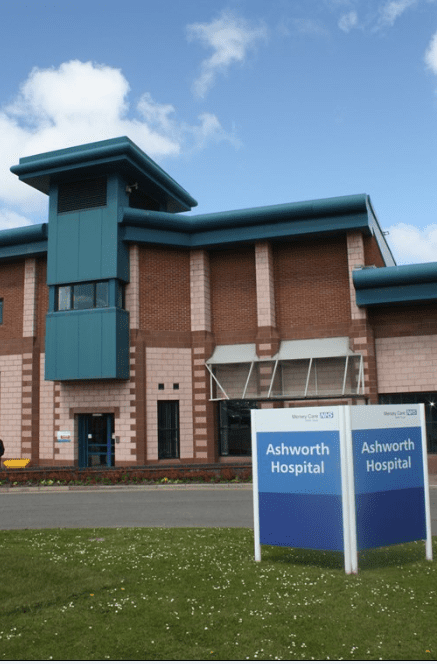
In the past, the hospital faced criticism over incidents of abuse and poor patient treatment. In 1992, an inquiry was conducted into the conditions and treatment of patients. It uncovered instances of physical and psychological abuse, revealing, for example, that staff had used a pig’s head and other similar methods for intimidation.
The inquiry also exposed serious ethical breaches. Notably, it came to light that children had been allowed access to patients with a history of sexual offences. Recommendations were made to improve security, which were subsequently implemented.
Ashworth Hospital has 13 wards with beds for 210 patients. Individuals are sometimes admitted directly from the community or police custody. These individuals are considered a danger to others, and their admission requires a formal diagnosis by a specialist. The cost of keeping one patient in the hospital is approximately £300,000 per year.
The average length of stay at Ashworth is 6-7 years, although some patients are discharged much sooner. If, after a thorough assessment, a psychiatrist determines there are grounds for it, a patient may be transferred to a hospital or facility with a lower level of security.
The History of the Psychiatric Hospital near Liverpool
The history of Ashworth Hospital, in terms of its buildings, began with Moss Side House, a convalescent home for children from Liverpool’s workhouses, which was founded in 1878.
During the First World War, this building became a military hospital for treating soldiers with psychological trauma, a condition now known as post-traumatic stress disorder (PTSD).
In 1933, Moss Side became a specialist institution for the treatment of mental illness.
In 1974, due to overcrowding at Broadmoor Hospital, construction began on the Park Lane Special Hospital on the Moss Side site.
In 1989, Moss Side and Park Lane merged to form Ashworth Hospital.
This marked the beginning of Ashworth Hospital’s modern history, specialising in the assessment, treatment, and care of men aged 18 and over in high-security conditions. It serves patients from the Midlands, North Wales, and the North West of England who typically pose a serious risk to the public.

In January 2023, the hospital received an overall rating of ‘Good’ from the Care Quality Commission (CQC), with its level of care being rated as ‘Outstanding’.
In March 2024, the Department of Health and Social Care renewed the facility’s licence for the next five years, confirming that it meets the highest standards for providing psychiatric services in the high-security sector.
The Hospital’s Exact Location
Where exactly is Ashworth Hospital located? You can find it at Parkbourn, Maghull, Liverpool, Merseyside, L31 1HW. This is 10 miles (16 km) north-east of Liverpool.
Ashworth Hospital is part of Maghull Health Park, a medical complex managed by Mersey Care that specialises in secure mental healthcare. The park also includes Rowan View, a medium-secure unit, and Aspen Wood, a low-secure facility designed for patients with learning disabilities and autism.
Who is at Ashworth: Patient Profiles and Supervision

Given the patient population, 24-hour observation is essential, and this is strictly enforced. Patients can only move around when escorted by hospital staff. Externally, Ashworth can feel like a prison, with its cameras, alarms, and searches. Yet it remains a hospital – many people, after receiving medical care, leave the facility and never return.
One of the facility’s most famous patients was the Moors murderer Ian Brady, who repeatedly applied for a transfer to prison but was always denied. He remained within the hospital’s walls for decades. There were no grounds for his release, as his case proved to be exceptionally complex.
At a mental health tribunal, Brady called himself “Ashworth’s most conspicuous patient.” However, staff at the facility stated that he was treated the same as everyone else.

Another patient, Stefan, arrived at Ashworth Hospital in 2008 after developing serious mental health problems while serving a prison sentence for drug-related offences. His condition required specialised treatment, leading to his transfer to this high-security psychiatric hospital.
Stefan enjoyed walking in the hospital garden – a surprisingly peaceful corner amid the metal fences and concrete walls. In an interview with a BBC correspondent, he challenged the myth of the institution’s harshness.
Stefan was preparing to leave the hospital in 2013, after completing his treatment for schizophrenia. He explained that he used to suffer from paranoia, believing that people wanted to kill him. Although he was filled with anger and frustration for a long time, thanks to the right treatment, he began to notice significant changes in himself.
He noted that among the patients at Ashworth were many people with severe mental disorders who could be unpredictable and dangerous. And this wasn’t paranoia, as several staff members had even sustained serious injuries. According to Stefan, the severe illnesses treated there are rarely seen elsewhere in the country.
Surveillance cameras are everywhere in the hospital, allowing all patient movements to be tracked. Staff assigned to these individuals escort them and maintain constant radio contact with a central control room.
There are several pleasant spots in Ashworth, including a colourful art room, a cricket pitch, and chicken coops. Patients are housed in 14 wards, each specialising in a particular stage of treatment – from initial assessment to rehabilitation. Individuals are grouped according to their condition and therapeutic progress, creating an environment that promotes recovery.
Despite its reputation as a place that holds “monsters,” the hospital staff see them as people suffering from serious mental illnesses. Doctors and nurses work hard to improve the condition of their patients. The hospital runs creative workshops, pottery and cooking classes, as well as film screenings and even bingo nights. The main goal is to engage patients in an active life because, as staff members note, everyone needs to feel a sense of purpose.
The rooms are not furnished like prison cells. Patients can keep personal belongings: photographs, books, and music CDs. There are other comforts too, such as en-suite facilities and a lack of traditional bars. Only the narrow window panels serve as a reminder of their restricted freedom.
This hospital is another reminder of how important it is for men to look after their health. As for women’s health in Liverpool, it is supported by figures like Louise Kenny.