
War is the worst thing that can happen to any country. It brings tears, pain, death, destruction, and an incredible strain on the economy. Humanity has already endured two world wars that claimed millions of lives. Today, we will explore what life was like in Liverpool during the First World War. You can read more about this on the iliverpool.info website.
The City of Liverpool Before the War
When the world was plunged into the First World War, Liverpool was a prosperous city with magnificent architecture.
To put its growth into perspective, in 1700 the city’s population was approximately 6,000. A century later, it had swelled to 80,000. By the eve of the First World War, Liverpool was home to 684,958 people. This rapid population growth was driven by the agricultural and industrial revolutions, as well as the city’s strategic location. Many saw Liverpool as a place of opportunity.
At the beginning of the 20th century, trade was booming, and Liverpool was involved in every aspect of the nation’s commerce and industry. The construction, shipbuilding, and engineering sectors were also thriving, and the city’s economy continued to grow.
The local port was also constantly expanding, and its waterfront boasted the largest number of docks in the world. This work was predominantly done by men, but it was often casual labour with low pay, typically undertaken by the poorer classes. Liverpool at the start of the 20th century was a city of contrasts, where poverty and neglect existed alongside elegance and luxury. In 1911, the Mersey Docks and Harbour Board opened the Liver Building, and construction began on the Cunard Building in 1914.
It is no exaggeration to say that before the First World War, Liverpool was the maritime heart of Great Britain.
How Liverpudlians Contributed to the War Effort
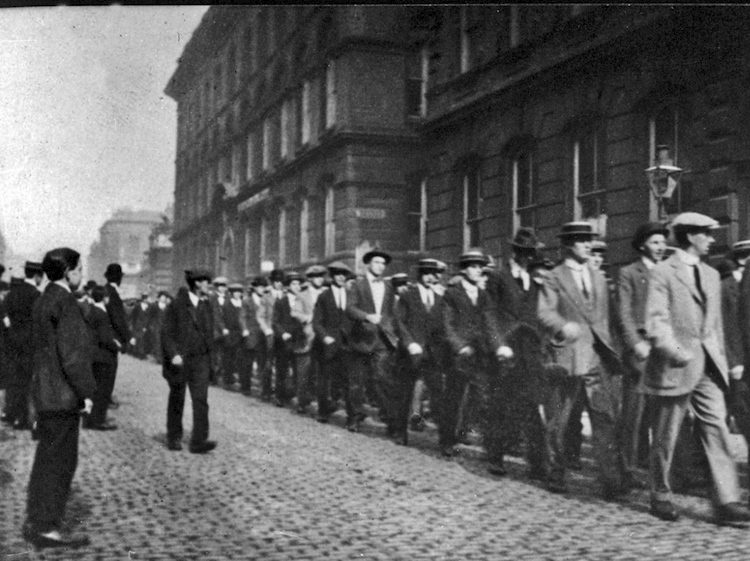
As the First World War gathered pace, it became clear that Liverpool held a special status in the conflict due to its deep-water port and extensive docks. Consequently, the largest mobilisation of men in Liverpool was for the Royal Navy, with over 12,000 men called up for service at sea. The men of Liverpool were notably eager to enlist and fight.
When Lord Derby appealed for volunteers, a queue formed, and a thousand men were signed up within hours. Over several months, four “Pals” battalions were formed in the King’s (Liverpool) Regiment. Tragically, by the end of the war, 2,800 of these men had been killed.
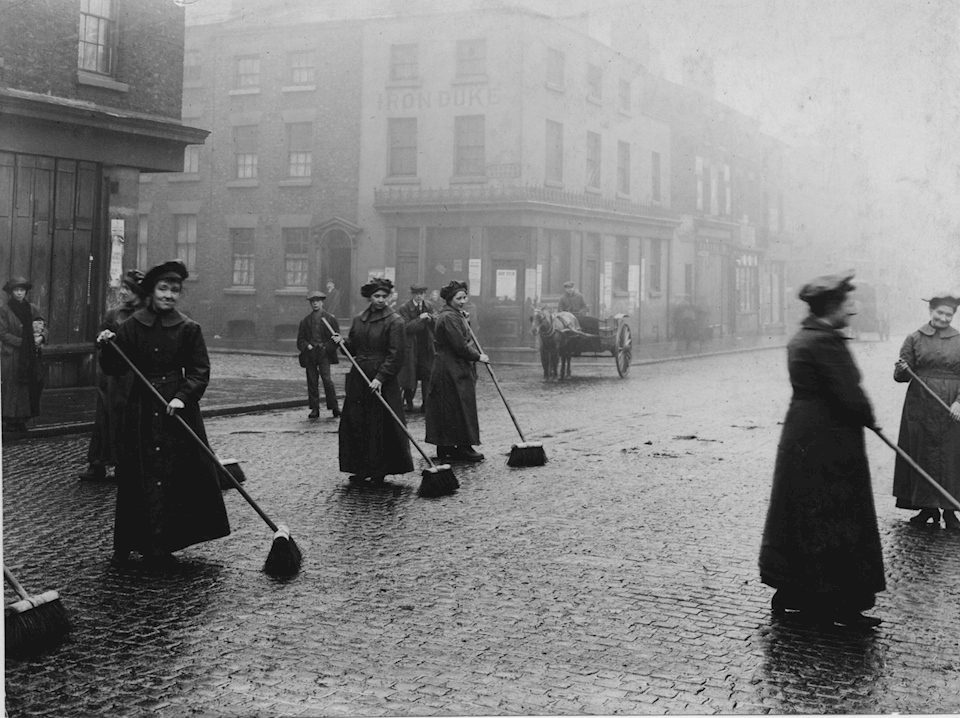
Because a large portion of the male population went to fight, women had to master traditionally male professions. They worked in factories, on farms, in government offices, for the postal service, and on public transport. Workers were particularly needed in the hazardous munitions factories. By the end of the war, 950,000 women were employed in these vital roles across the country.
While today we take for granted that women can perform the same jobs as men, at the beginning of the 20th century, this was nothing short of a revolution. Before the war, women were primarily occupied with domestic duties. Although some worked, it was typically in fields like education, cleaning, or private tutoring.
The First World War inflicted immense damage on the world, claiming millions of lives and destroying cities and towns. The planet had barely recovered before the Second World War broke out just a few decades later, once again bringing death, grief, pain, and tears.
Our city undoubtedly contributed to the war effort in support of the Allies. Fortunately, however, our losses were not as significant as those in other cities or countries.
We hope you found this material informative.