
We’ve previously introduced our readers to some of Liverpool’s renowned scientists. Today, we delve into the life story of English botanist, John Willis. For more details, keep reading on iliverpool.info.
A Prolific Career
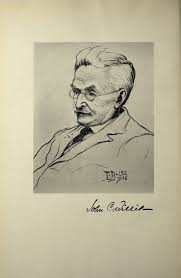
Born in Liverpool in 1868, John Willis received his education at University College Liverpool, followed by Gonville and Caius College, Cambridge, where he specialised in botany.
In 1896, our local luminary was appointed Director of the Royal Botanic Gardens, Peradeniya, in what is now Sri Lanka. John held this position until 1912, after which he took up the directorship of the botanical garden in Rio de Janeiro.
It’s worth noting that Willis was a distinguished member of both the Linnean Society and the Royal Society.
1922 saw the publication of Willis’s significant works: “A Dictionary of the Flowering Plants and Ferns” and “Age and Area: A Study in Geographical Distribution and Origin of Species.”
The Age and Area Hypothesis
During his tenure in Ceylon (now Sri Lanka), Willis formulated his influential Age and Area hypothesis. Through extensive botanical fieldwork, he meticulously studied the distribution patterns of Ceylonese vascular plants. His findings led him to conclude that the size of a species’ range could serve as an indicator of its age. Willis also posited that species extinction was rare, and new forms primarily arose through mutation.
In 1922, John penned “Age and Area,” a book exploring the distribution and origins of species. However, just two years later, American botanist Merritt Lyndon Fernald challenged Willis’s hypothesis, asserting that studies of Northern Hemisphere flora did not support it. Despite this, our fellow Liverpudlian stood his ground, maintaining that his hypothesis should be applied not to individual species but to groups of related species.
In 1926, Willis published an article directly addressing the criticism levelled against his hypothesis.
The botanist subsequently authored other notable books, including “The Course of Evolution” and “The Birth and Spread of Plants.”
In 1940, he published another controversial work, “The Course of Evolution by Differentiation or Divergent Mutation rather than by Selection.” In this book, Willis questioned the adequacy of natural selection of random variations as the primary driver of evolution.
John Willis passed away in 1958 at the age of 90. He was posthumously awarded the Darwin-Wallace Medal by the Linnean Society.
Fascinating Botanical Facts
Botany, the study of plant biodiversity, has evolved significantly due to humanity’s reliance on plants in daily life. Theophrastus (372-287 BC) is widely considered the founder of botany. John Willis, meanwhile, is just one of many scientists who have made substantial contributions to its ongoing development. Below are some intriguing facts about botany:
- Mushrooms typically grow for 3-6 days and perish within 14 days.
- The fungi component of lichens can live for up to 600 years.
- A 20-meter tall cactus can hold 3,000 litres of water and can survive for two years without any.
- Forests are disappearing at an alarming rate globally – 20 hectares every minute!
- Aristotle established the first zoo and botanical garden for scientific research.
- Many cactus species do possess leaves, which usually grow low to the ground.
- The giant water lily, found in the Amazon River, boasts the world’s widest leaves, reaching up to two metres in diameter.
That concludes our informative piece for today. We hope you’ve gained a wealth of new and useful insights!