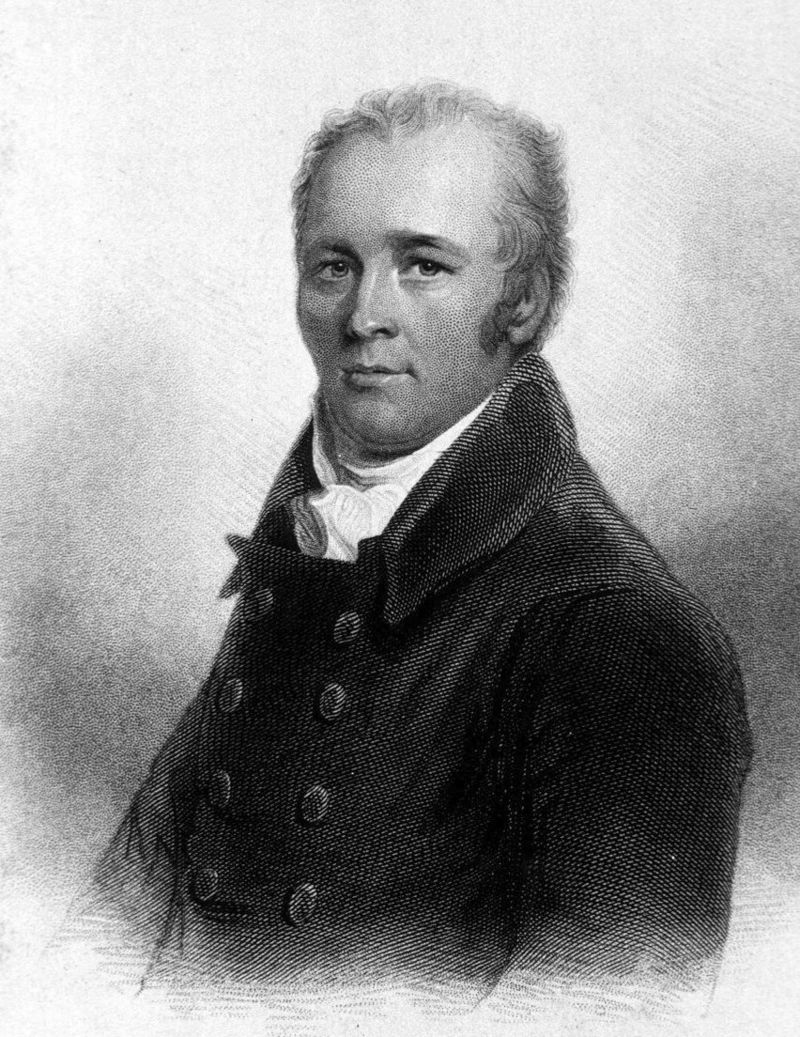

We continue to introduce our readers to the famous residents of Liverpool who have left their mark on the city’s history. Today, we’re going to talk about the Scottish physician James Currie, who established a successful medical practice in Liverpool. Read more about the doctor’s life and work on the iliverpool.info website.
Childhood and Education
The future physician was born in Kirkpatrick-Fleming, Annandale, into a notable Scottish family. James was first educated in Middlebie, before continuing his studies at the grammar school in Dumfries.
In 1776, James Currie began studying medicine in Edinburgh. During his studies, he contracted rheumatic fever, an ailment that would trouble him periodically throughout his life. After completing his studies, James earned his Doctor of Medicine (MD) degree and moved to Liverpool. In our city, Currie worked as a physician at the local infirmary.

Career Development: From Business to Medicine
Initially, James went into business in Virginia. After five years of running an unprofitable enterprise, he decided to return to Great Britain in 1776. As mentioned above, Currie began to study medicine and eventually established his own practice in Liverpool.
During his medical career, he pioneered the use of cold water treatments to cure infectious fevers. The doctor described his experiences and practical recommendations in a pamphlet, and his work on the use of cold water in fever was published in 1797. It is considered a scientific basis for hydrotherapy.
Currie was a member of the London Medical Society.
It is worth noting that Currie was a great admirer of the poetry of Robert Burns, whom he met on more than one occasion. The doctor and the poet corresponded for many years, and some of these letters have survived to this day.
After Burns’ death, James published an authoritative anthology of his work. Although the doctor had no prior experience as an editor, the publication was a success. “The Life of the Author” was published in four volumes in 1800.
Personal Life
In 1783, the doctor married Lucy Wallace, the daughter of a successful merchant. The couple went on to have five children.
Besides medicine, James had a keen interest in other fields. He was a founding member of the Liverpool Literary Society and was also interested in politics. The doctor was known to be an advocate for the abolition of slavery and even wrote several political letters on the subject.
The physician suffered from ill health throughout his life. In 1804, James became seriously ill, forcing him to abandon his medical practice in Liverpool and travel to Bath in search of a cure. In 1805, James Currie passed away at the age of 49.
The Effect of Cold Water on the Body: The Views of Modern Doctors

Centuries ago, James Currie argued that cold water has a positive effect on the body and could even cure infectious fevers. But what does modern medicine say?
Doctors confirm that cold water does indeed have a positive impact on the body. Since ancient times, our ancestors bathed in natural springs. The benefits of cold water include:
- Activating the immune system. Scientists have repeatedly conducted experiments on the effects of cold water immersion on the body. The results show that those who regularly douse themselves with cold water experience positive outcomes: improved sleep, increased resistance to viruses and infections, and stabilised blood pressure.
- Weight loss. People who regularly embrace cold water therapy often lose excess weight, even without changing their eating habits. This is because the body begins to burn fat reserves in order to warm itself up, leading to a gradual loss of extra pounds.
- Improved well-being. During cold water immersion, a person’s mood can improve, while feelings of apathy and depression may lessen. Cold water effectively “reboots” the body, leading to an overall better sense of well-being.
And that is the life story of the famous Scottish doctor who practised cold water therapy in Liverpool. We hope you found our article informative and that it has given you some food for thought.