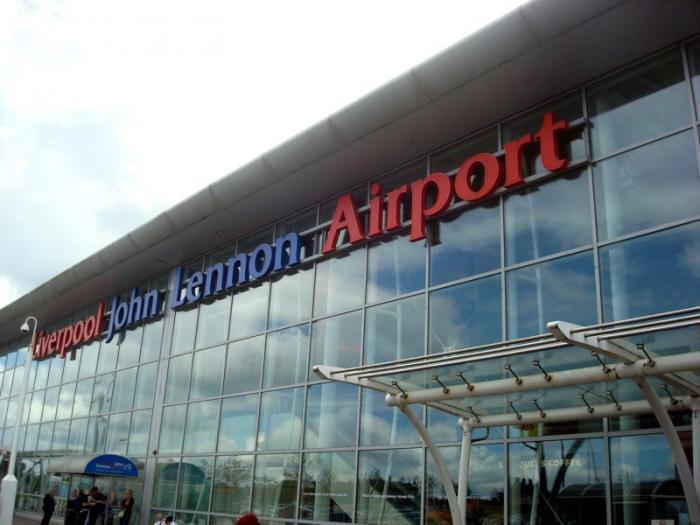

An airport is a crucial piece of infrastructure for a city’s growth and development. It boosts the economy, makes life easier for residents, creates new jobs, and drives innovation for the city and the wider region. Today, we’re taking a look at Liverpool John Lennon Airport. Read on to discover the history of the airport at iliverpool.info.
The History of Liverpool Airport
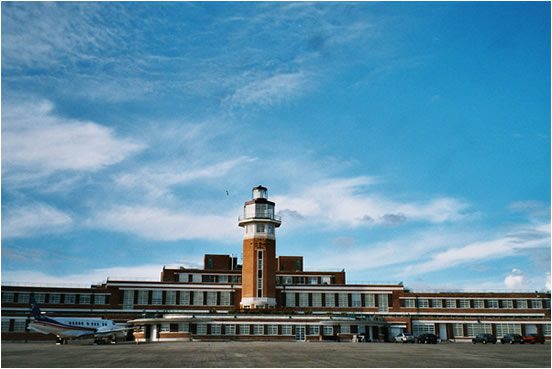
Liverpool’s airport was built on the grounds of Speke Hall. Although scheduled flights began operating from the site in 1930, the official opening of ‘Speke Airport’ took place in 1933. Within just a few years, air travel from the city expanded rapidly. Flights were established across the Irish Sea, and a passenger terminal, control tower, and two aircraft hangars were built.
During the Second World War, the airport played a vital role. It was requisitioned by the Royal Air Force and became known as RAF Speke. The site housed ‘shadow factories’ for the Rootes and Handley Page companies, where thousands of bombers, such as the Bristol Blenheim and Handley Page Halifax, were built. The airport was also home to the Merchant Ship Fighter Unit.
Rapid Growth of Liverpool Airport
After the Second World War, Liverpool Airport began to develop rapidly. Passenger numbers started to climb, rising from 50,000 in 1945 to 75,000 just three years later. For a brief period, Liverpool even overtook Manchester as the region’s busiest airport, but this didn’t last long. By 1949, Manchester Airport had reclaimed the top spot.
The year 1966 was a landmark for Liverpool’s aerodrome with the opening of a new 2,300-metre runway. This crucial development allowed the airport to operate 24 hours a day, cementing its importance as a key piece of regional infrastructure.
In 1986, a new passenger terminal was opened, and the original terminal building ceased operations. This historic building was later redeveloped and now functions as the Crowne Plaza Liverpool John Lennon Airport hotel.
In 2000, work began on a major new passenger terminal, a project costing over £42 million. This reconstruction tripled the size of the terminal and significantly increased its passenger capacity. Two years later, the terminal was officially opened by Her Majesty Queen Elizabeth II.
In 2001, 21 years after the death of the Beatles star, the airport was renamed in honour of John Lennon. It was the first airport in the United Kingdom to be named after an individual. A 2.1-metre bronze statue of Lennon was installed above the check-in hall, and the airport’s motto, a line from his song ‘Imagine’, can be seen on the roof: ‘Above us only sky’.
Further innovation came in 2005 with the construction of a new apron exclusively for EasyJet, featuring six stands and a pier with six boarding gates. A year later, a major reconstruction of the main runway began, which was completed in 2007.
In 2007, construction started on a multi-storey car park. Work also began on a Hampton by Hilton Liverpool/John Lennon Airport hotel, which opened its doors in 2009.
It’s worth noting that the airport is constantly evolving, updating its facilities for passenger comfort. This applies not only to the terminal interior but also to the new destinations on offer. In 2023, Jet2.com announced it would be opening its 11th UK base at the airport. This means the airline will serve 20 destinations across Europe, including seven brand new routes for Liverpool.
That’s the story of the creation and growth of Liverpool John Lennon Airport. We hope you found this article insightful.