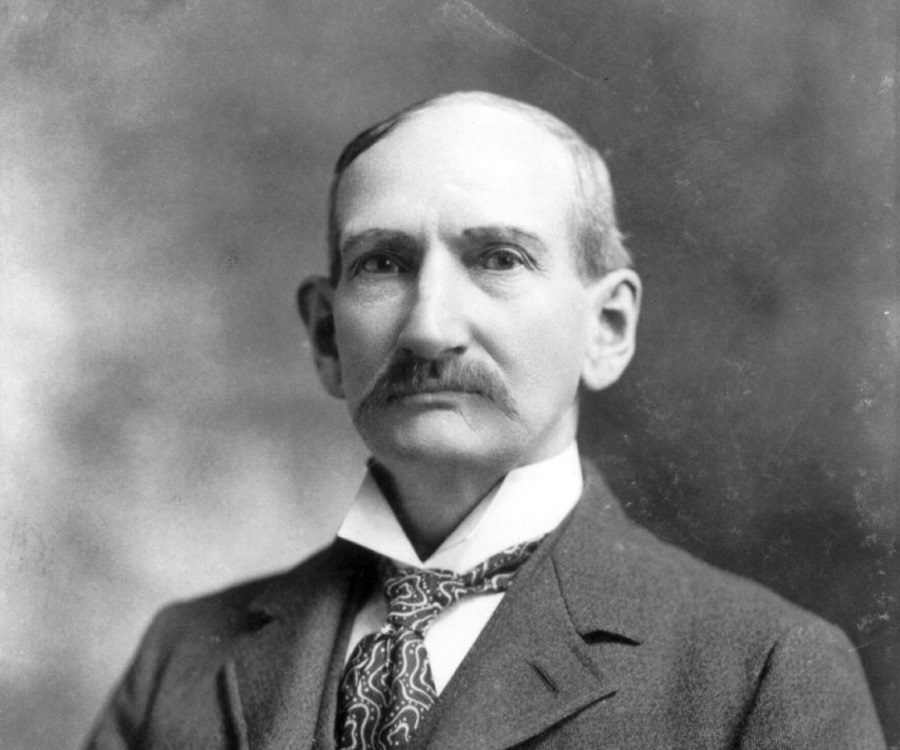

Liverpool has always been a hotbed of talent, a city that’s produced countless renowned individuals who, through sheer hard work and determination, have made a name for themselves across the country. Today, we’re diving into the fascinating story of Frank Hornby, a true Liverpudlian innovator, businessman, and even a politician, who started by designing toys and eventually built an empire around them. You can delve deeper into Hornby’s incredible journey right here on iliverpool.info.
How Frank Hornby Became an Inventor
Born in Liverpool in 1863, the future inventor’s path wasn’t immediately obvious. His father was a provisions merchant, and at just 16, Frank left school to work as a cashier in the family business.
In 1887, our local hero married a schoolteacher, and together they had two sons and a daughter.
Tragedy struck in 1899 when Frank’s father passed away, leading to the closure of the family firm.
It was in his home workshop that Hornby began crafting toys for his sons. He started by cutting out metal sheets to create various models – cranes, lorries, bridges, and more. Over time, he hit upon a brilliant idea: creating interchangeable parts that could be used across different constructions, allowing one toy to be reassembled into something entirely new. By 1900, he had perfected the components he wanted to sell, and just a year later, he patented his groundbreaking invention.
Frank Hornby then embarked on the challenging task of finding companies willing to manufacture his innovative toys. However, the initial prototypes weren’t particularly appealing, and nobody seemed interested. It was his employer, David Elliott, who saw the potential. Elliott believed in Hornby’s vision and became his partner, offering him some spare rooms to bring his ambitious plans to life.
Early Business Ventures: A Slow Start to Profit
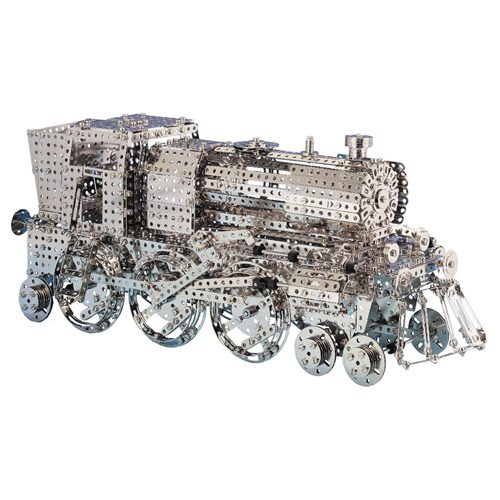
Hornby christened his construction sets “Mechanics Made Easy.” He managed to secure a contract with manufacturers for supplying the parts, and by 1902, the toy sets were hitting shop shelves. Despite selling 1,500 sets within a year, the partners saw no profit. Undeterred, Hornby continued to refine his designs and produce new parts. By 1904, six new sets were released, complete with instructions in two languages. It wasn’t until 1906 that Hornby and Elliott finally saw a modest profit.
The Company’s Expansion
In 1907, our hometown hero began manufacturing the parts himself. That same year, Hornby registered the trademark “Meccano,” and sets under this new brand quickly appeared. Hornby then set his sights on establishing his own company, leading to the creation of “Meccano Ltd.” However, his partner, David Elliott, opted not to join, leaving Hornby as the sole owner. The company steadily grew, with its turnover reaching an impressive £12,000 by 1910. Meccano sets soon found their way into homes worldwide. Hornby’s son even founded “Meccano” in Paris, and an office was opened in Berlin.
Frank Hornby’s inventive spirit didn’t stop there; his legacy includes a vast array of innovations and companies. He began importing clockwork motors from Märklin, produced clockwork lithographed tinplate trains, the iconic Hornby clockwork train, Dinky Toys (die-cast miniature models of cars and lorries), and the Hornby Dublo model railway system, to name just a few.
By the 1930s, our local legend had become a millionaire. In 1931, Frank entered politics, becoming a Conservative Party MP, and temporarily stepped away from his business ventures. He then retired from politics in 1935.
Sadly, the celebrated inventor passed away from a heart attack in 1936.
That’s the remarkable life story of Frank Hornby, a true Liverpudlian who built a colossal toy manufacturing empire. We hope you found this material insightful and perhaps even drew some inspiration from his incredible journey.
And what do *you* know about the “Meccano” company? We’d love to hear your thoughts in the comments on social media.