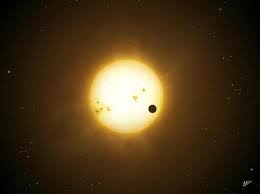

People have always been fascinated by the sky: the stars, the moon, the planets. The desire to know what lies beyond planet Earth is a timeless curiosity. Jeremiah Horrocks was an English astronomer, born in Liverpool, who was the first to demonstrate that the Moon moves around the Earth in an elliptical orbit. Horrocks is recognised as one of the founding fathers of British astronomy.
Today, we will delve into his life and professional work. Read more about this local figure on the iliverpool.info website.
Youth and Education
The future astronomer was born near Liverpool, at Lower Lodge Farm in Toxteth Park. Jeremiah was introduced to astronomy as a child, using it to measure the local time for setting clocks.
In 1632, the young man enrolled at Emmanuel College, Cambridge University, but he never completed his studies. In 1635, he left the university for reasons that remain unclear. Instead, he dedicated himself to studying astronomy, collecting books and the necessary equipment. In time, Jeremiah acquired a telescope.
A Passion That Became a Profession
Liverpool was a port city, so navigational instruments were often brought in. However, the Liverpool native needed specialised astronomical equipment. Therefore, Horrocks decided to make his own astronomical instruments. He was well-placed to do this, as his father and uncle were watchmakers and had experience creating precise instruments. The young man helped his relatives by working in the family business during the day. In return, his family supported him, helping him design and build tools for studying the stars.
Horrocks possessed an astronomical radius, which he used to measure the angle between two stars. He later created a more refined version of this instrument.
It is worth noting that Horrocks was the first to demonstrate that the Moon moves around the Earth in an elliptical path. He also predated Isaac Newton in suggesting the influence of both the Sun and the Earth on the Moon’s orbit.
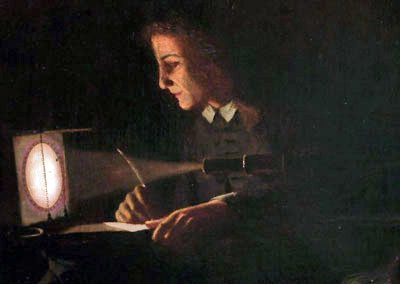
The astronomer also created a simple helioscope by focusing the Sun’s image through a telescope onto a flat surface. This equipment made it safe to observe the Sun.
Subsequently, Horrocks made a reasoned guess about the size of Venus. It was previously thought to be larger than Earth and closer to our planet. The astronomer’s treatise on his transit study, “Venus in sole visa” (“Venus seen on the Sun”), was later published by the Polish astronomer Johannes Hevelius.
Recognition
Jeremiah Horrocks lived a short life, dying at the age of 22 from unknown causes. It was a great loss to the science of his time.
However, humanity remembers all the astronomer’s discoveries and his scientific legacy. This local figure is mentioned on a memorial plaque in Westminster Abbey. The lunar crater Horrocks is named in his honour.
In 1859, a marble tablet and stained-glass windows were installed in the parish church of St Michael in the Hamlet to commemorate Jeremiah Horrocks.
In 1927, the Horrocks Observatory was built in Preston. In 1993, the Jeremiah Horrocks Institute for Astrophysics and Supercomputing was established at the University of Central Lancashire. In 2012, it was renamed the Jeremiah Horrocks Institute for Mathematics, Physics and Astronomy.
Interesting Facts About Astronomy You Might Not Know
Astronomy is the science that studies the Universe, and this Liverpool native made a great contribution to its development. Below are some interesting facts related to astronomy:
- The Universe is still being studied. Humanity has studied the sky, stars, Moon, and Sun since ancient times. However, scientists and astronomers are still exploring the Universe today. There is still much that is mysterious and unexplained, although a great number of discoveries have already been made.
- Not all lights are stars. If you observe the night sky, you see hundreds of lights. Many people think these are all stars, but this is not the case. We are observing not only stars but also planets and comets. We can also see light from stars that no longer exist. This is because stars are very far away, and their light takes hundreds or thousands of years to reach our planet.
- The lowest temperature on the Moon is -164 degrees Celsius, while the highest temperature on our satellite is +117 degrees.
- The largest asteroid, named Ceres, has a diameter of 940 kilometres.
- There are mountains on Mars. For those who may not know or have forgotten their school lessons, Mars has mountains, and their height reaches 20-25 kilometres.
- The Moon also has mountains, with the highest reaching a height of 11,500 metres.
- The volume of Saturn is impressive, exceeding that of Earth by 758 times. At the same time, Saturn is a very light planet.
- Space has its own scent. Many astronauts have claimed this, noting the presence of an unusual aroma in their spacesuits: the smell of metal, charcoal, or fried steak.
Here is our interesting and informative material. We hope you have read something new and interesting and learned more about this famous local figure.
Are you interested in astronomy? What facts do you know about this science? We look forward to your comments on social media. Your opinion is important to us.