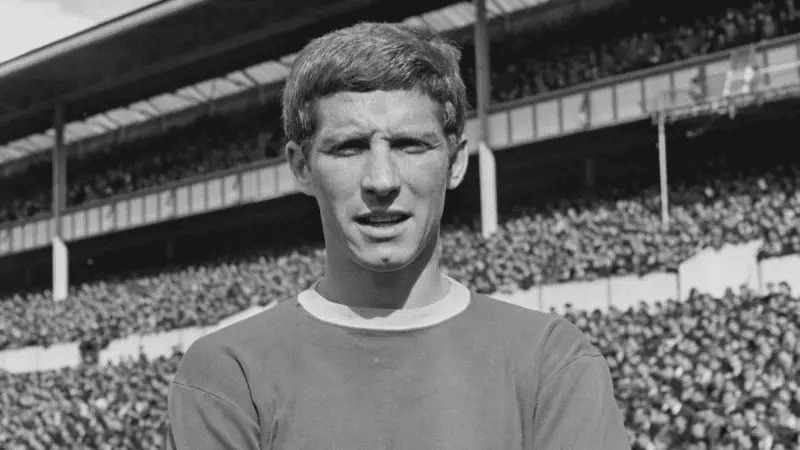

Alan Ball is undoubtedly one of the greatest players in Everton’s history, second only to the legendary Dixie Dean. He wasn’t just a Toffee, though; he also played for several other clubs and, most famously, was a key member of the England national team. As the youngest player in the squad, he played a crucial role in their triumphant 1966 World Cup win. Given his remarkable career, Alan Ball is the perfect subject for the “I Am Sporty” series on iliverpool.info.
The Rise to the Top
After the 1966 World Cup final, some of his teammates even nominated Alan Ball for Man of the Match. And it’s easy to see why—he provided the decisive cross for Geoff Hurst’s famous and controversial goal. Sir Alf Ramsey himself said Ball couldn’t have played any better. However, that statement was perhaps a little premature, as this talented player was only just getting started. The World Cup was a high point in Ball’s career, but it was far from the only one. So how did he reach such a world-class level?
Born on 12th May 1945 in Farnworth, Lancashire, Alan Ball was destined for footballing greatness. From a young age, his passion for the game was clear, and his development was heavily influenced by his father, Alan Ball Sr., an amateur player and coach who helped shape the future champion.
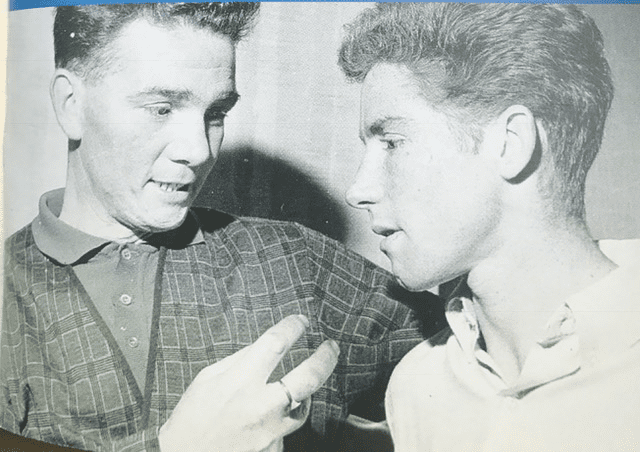
Alan Jr. quickly honed the skills essential for a midfielder, which would make him one of the standout players of his era. Despite his small stature, he stood out on the pitch with his boundless energy and technical ability. His father instilled in him a powerful sense of discipline and determination, traits many believe were the most crucial factors in his remarkable career.
Ball made his professional debut for his father’s club, Blackpool, in 1962. This came after he was rejected by numerous other clubs for being too short! But Blackpool had faith in him. He became the club’s youngest-ever league debutant when he faced Liverpool, a game they lost 2-1. He played so well that he caught the eye of England manager Alf Ramsey and was called up to the national squad in 1965 at the tender age of 20.
At the 1966 World Cup, Ball was nothing short of brilliant. In the final, his stamina and work rate were astonishing; he tirelessly ran from box to box for the entire 120 minutes. His stellar performance caught the attention of Everton, who paid a record £110,000 to sign the gifted young player.
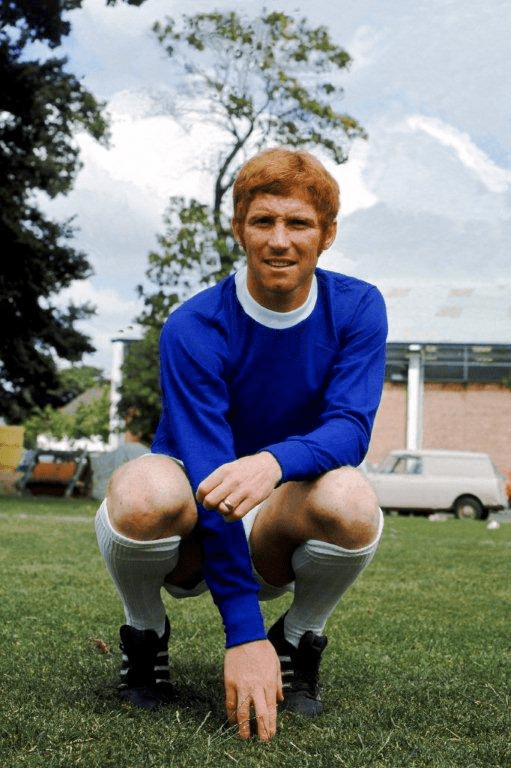
During his time at Everton, the club boasted the best midfield in English football, with Ball playing alongside Colin Harvey and Howard Kendall. But it was Ball who was the key figure, the driving force behind the Toffees’ success, including their 1970 league title victory.
For England, Ball earned 72 caps and scored 8 goals, also serving as captain for a time. But for a midfielder, goals are not the main measure of success. What truly mattered was his ability to deliver precise passes to his teammates, a task he excelled at brilliantly.
Ball spent six memorable years at Everton, playing over 250 games before being sold to Arsenal for a new record fee of £220,000. Unfortunately, he never quite shone as brightly at Highbury as he had at Goodison Park. Although he still showed his trademark fiery passion, his star was gradually beginning to fade.
From 1976 onwards, Ball played for Southampton for a few years before his career began to wind down, as footballers in their thirties are often considered to be in the twilight of their careers. He finally retired in 1983 at the age of 38, while playing for Bristol Rovers.
Career Legacy and Final Years
In his prime, Alan Ball was a mesmerising player to watch. He was a powerful mix of courage, confidence, and a burning desire to win. He didn’t just have bursts of brilliance; he possessed incredible stamina, which allowed him to work tirelessly for the full 90 minutes, match after match.
Early in his career, Ball scored an impressive number of goals for a midfielder. Many strikers would have been envious; at one point, he bagged 56 goals in just three seasons! However, his goalscoring rate eventually dropped, which was a source of frustration for a natural-born winner like him. Ball also tried his hand at management, but he never achieved the same level of success from the dugout as he did on the pitch.
A passionate advocate for the National Football Museum Hall of Fame, Ball was at a Liverpool event in 2006, just months before his death, where he inducted his World Cup teammate Martin Peters.
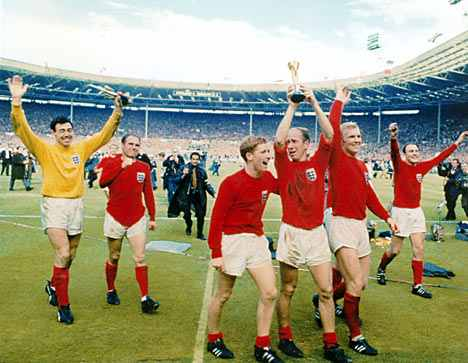
In 2000, Ball, along with other heroes of the 1966 World Cup, was awarded an MBE for his services to football. He died suddenly from a heart attack at his home in Warsash, Hampshire, in April 2007. His career at Everton and the 1966 World Cup victory remain his greatest achievements.