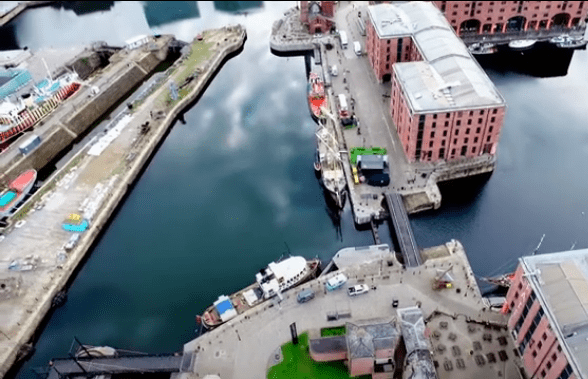

The Royal Albert Dock is a historic dock complex in Liverpool, opened in 1846 and named in honour of Prince Albert, Queen Victoria’s husband. Initially known simply as Albert Dock, the word “Royal” was later added to emphasise its importance and connection to the royal family. It is a landmark of Liverpool, and on iliverpool.info, we’ll explore its pioneering features.
Key Information
The shipping dock bearing Prince Albert’s name opened in Liverpool in 1846 and was the first in the world to be built from stone, iron, and brick, ensuring a higher level of safety for vessels. The dock was designed by architect Jesse Hartley and engineer Philip Hardwicke, based on a project by Prince Albert. For its time, the design incorporated many innovations!
During that period, Liverpool was developing rapidly thanks to industry. Trade was brisk, and it was crucial for the port to have warehouses and docks. At a certain point, the need for expansion arose, leading to the creation of the Albert warehouses, which later became the Albert Dock.
Innovative Features
Several features of the Albert Dock can be described as truly pioneering, involving both design and engineering solutions. It could be said that the designers employed quite radical ideas.
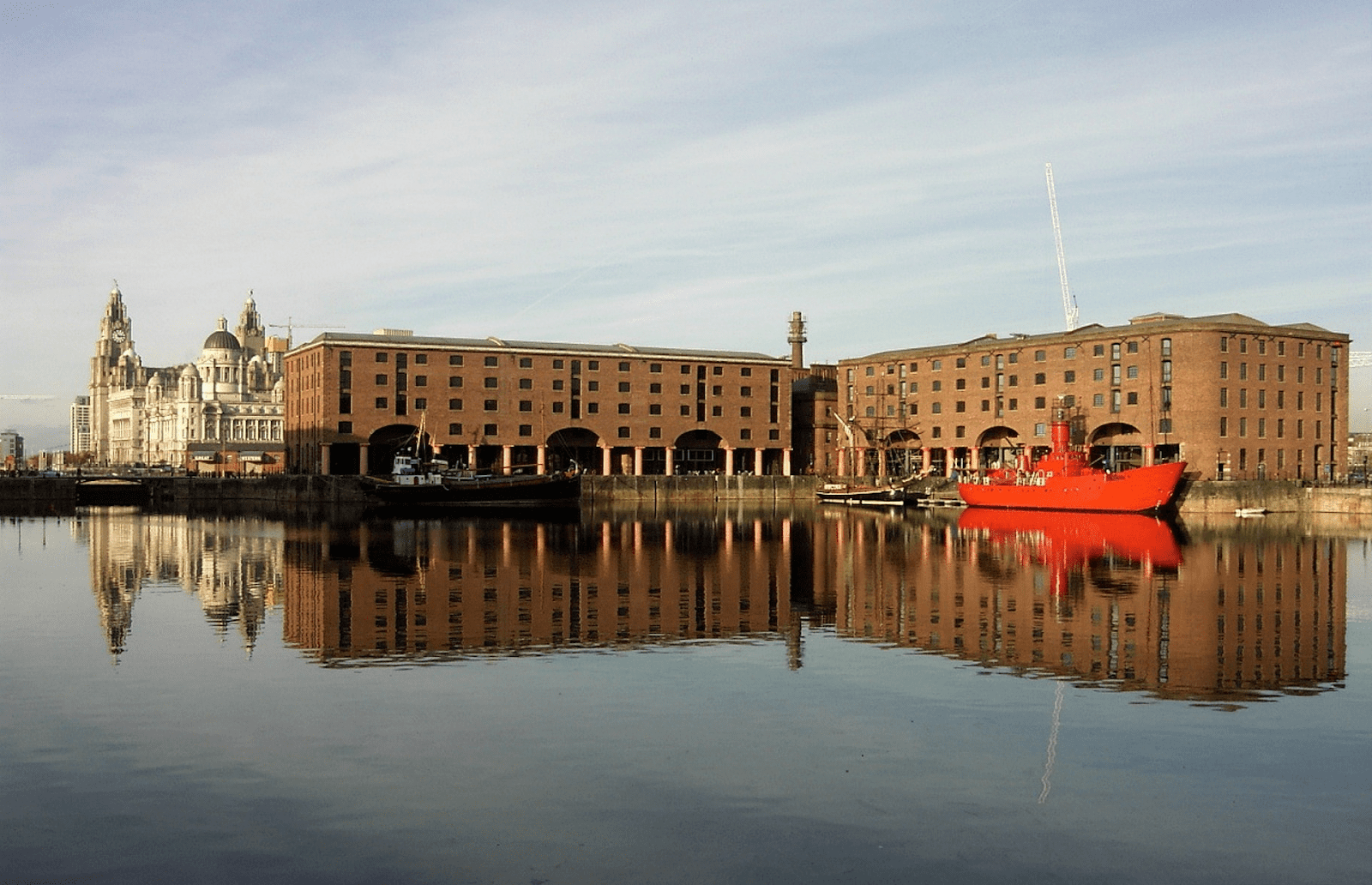
The fireproof design of the Albert Dock was a first in all of Victorian Britain. It was something unique, as the designers figured out how to significantly reduce the chances of their work being consumed by fire. Previously, buildings were constructed with predominantly wooden frames, but this one was made from cast iron, brick, sandstone, and granite. The Royal Albert Dock became the world’s first non-combustible warehouse system, which was very attractive to merchants. It became a popular storage facility for valuable cargo, including alcoholic beverages, tea, cotton, silk, tobacco, and ivory.
The use of stronger materials instead of wood also allowed the structures to withstand heavy loads. The dock featured a system of swing bridges and locks that regulated the water level and protected vessels from the tides. This too was an innovation for the mid-19th century.
Designer Jesse Hartley proposed another innovative solution in the project: ships were able to moor very close to the warehouses to load and unload cargo directly, without any intermediaries. This greatly simplified and accelerated the cargo handling process, making it more efficient and reducing the costs of transporting goods between ships and warehouses.
To confirm the fire resistance of the buildings, dock engineer Jesse Hartley conducted several experiments. He decided to build a similar but smaller structure (18 by 10 feet, or 5.5 by 3 metres), fill it with timber and tar, and set it alight to see if it would burn. Hartley tested several options before deciding on the safest combination of cast iron, brick, sandstone, and granite.
Hartley used “stressed skin” roofing for the docks, which was a groundbreaking solution for the time, as it was rarely used in traditional construction methods. This meant that the outer layers (the “skin”) worked together with the internal supports, resulting in a stronger structure.
An important architectural feature of the dock is the enormous cast-iron columns along the quayside. Hartley and Hardwicke used cast iron because granite – their preferred material – was too expensive. However, large quantities of granite were still necessary for the project, so the developers opened their own quarry in Scotland.
Interesting Facts and History
Let’s look at a few interesting facts related to the Albert Dock.
- When Prince Albert officially opened the docks in 1846, it was the first time a member of the royal family had visited Liverpool since King Richard. It was calculated that this had been 643 years prior.
- The docks and warehouses in the complex make up the largest collection of Grade I listed buildings in the United Kingdom.
- The Albert Dock is the most visited multi-use tourist attraction in the UK located outside of London.
The first commercial dock in Liverpool was built in 1715 and was named after Thomas Steers. Over time, more docks were built, and thanks to the development of the cotton industry in Lancashire, the Industrial Revolution, and the Manchester Ship Canal, Liverpool became the largest port city in the UK outside of London.
The technical features mentioned meant that merchants could unload ships and finalise deals much faster, so business in Liverpool thrived. By the end of the 19th century, the city was considered one of the wealthiest in the world. It was home to the headquarters of companies like the White Star Line and Cunard Line, which operated cruise liners.
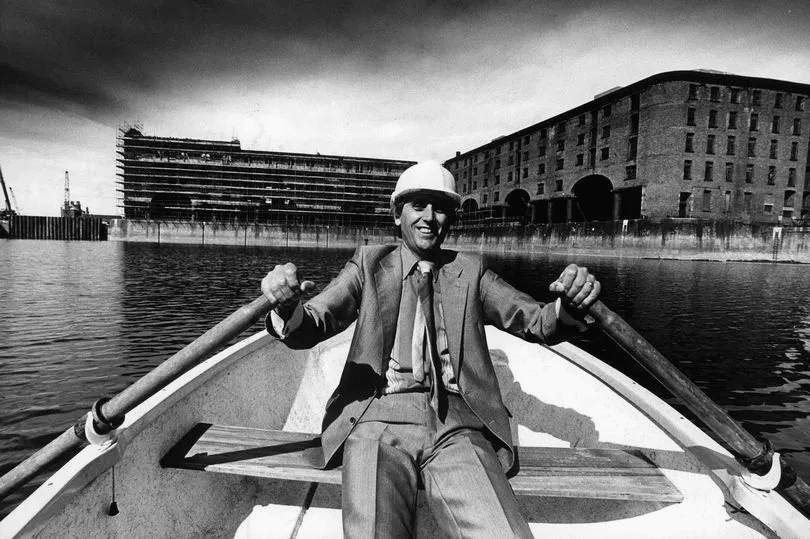
The Royal Albert Dock was damaged during the Second World War and lay derelict for many years due to the increasing size of ships and shipping containers. However, in the early 1980s, the city authorities invested in the reclamation and restoration of this landmark. It is now part of a UNESCO World Heritage site and a major tourist attraction. If you prefer unspoiled nature, you might want to visit Sefton Park.